The CIA, the Mob, and the Murder of a President
How the CIA Became What It Hired
Stephen Partello, J.D
Partello Consulting, LLC stevepartello.com
Historical Essay Copyright November 2026
"It was to be made clear to Roselli that the United States Government was not and should not become aware of this operation."
CIA Office of Security memorandum, "The Johnny Roselli Matter," on the 1960 plan to have the Mafia kill Fidel Castro [1]
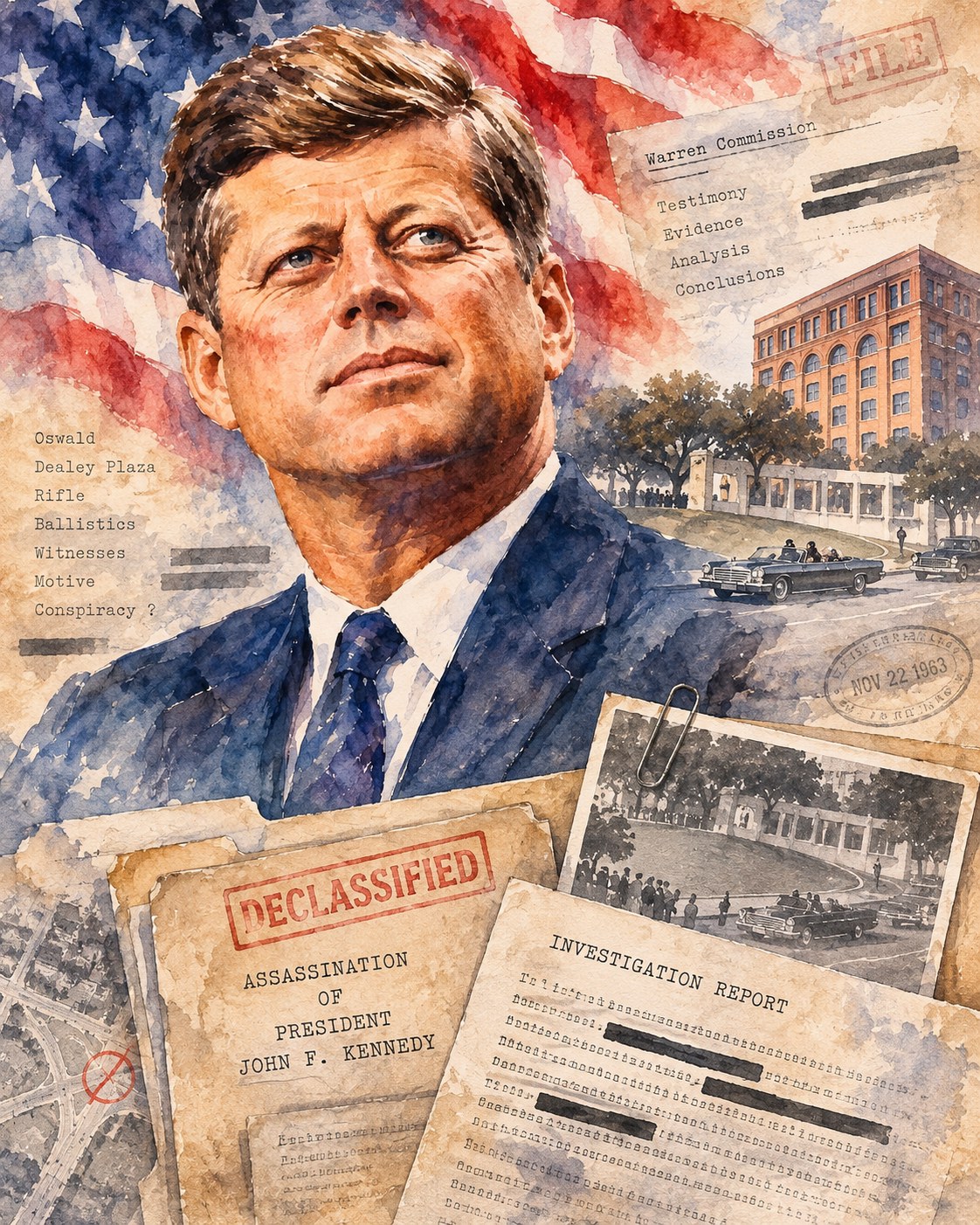
A Boy in a Classroom
On November 22, 1963, I was sitting in a history class at Boston College High School in Dorchester, Massachusetts, when the loudspeaker crackled and a voice told us that President Kennedy had been shot in Dallas. The Kennedys were not strangers to my family. My grandparents had known them from their years in East Boston, and I grew up understanding that Joseph Kennedy had attended the Fitton School. That afternoon, history stopped being something in a textbook.
I have spent more than sixty years trying to understand what happened that day. This essay is what I have concluded.
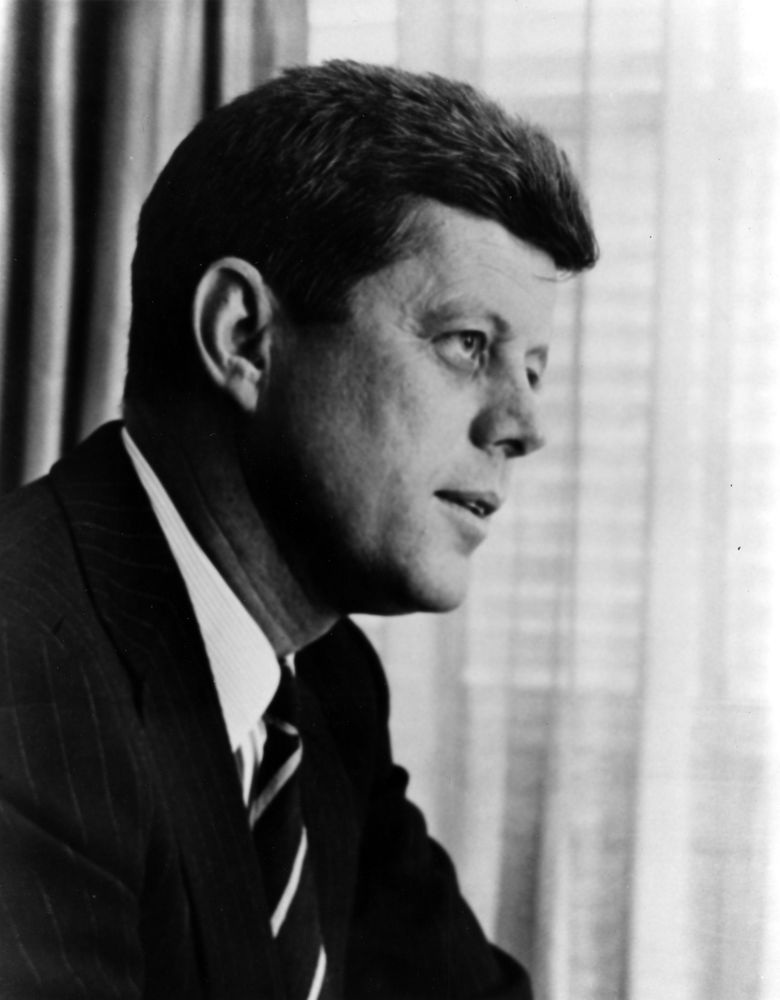
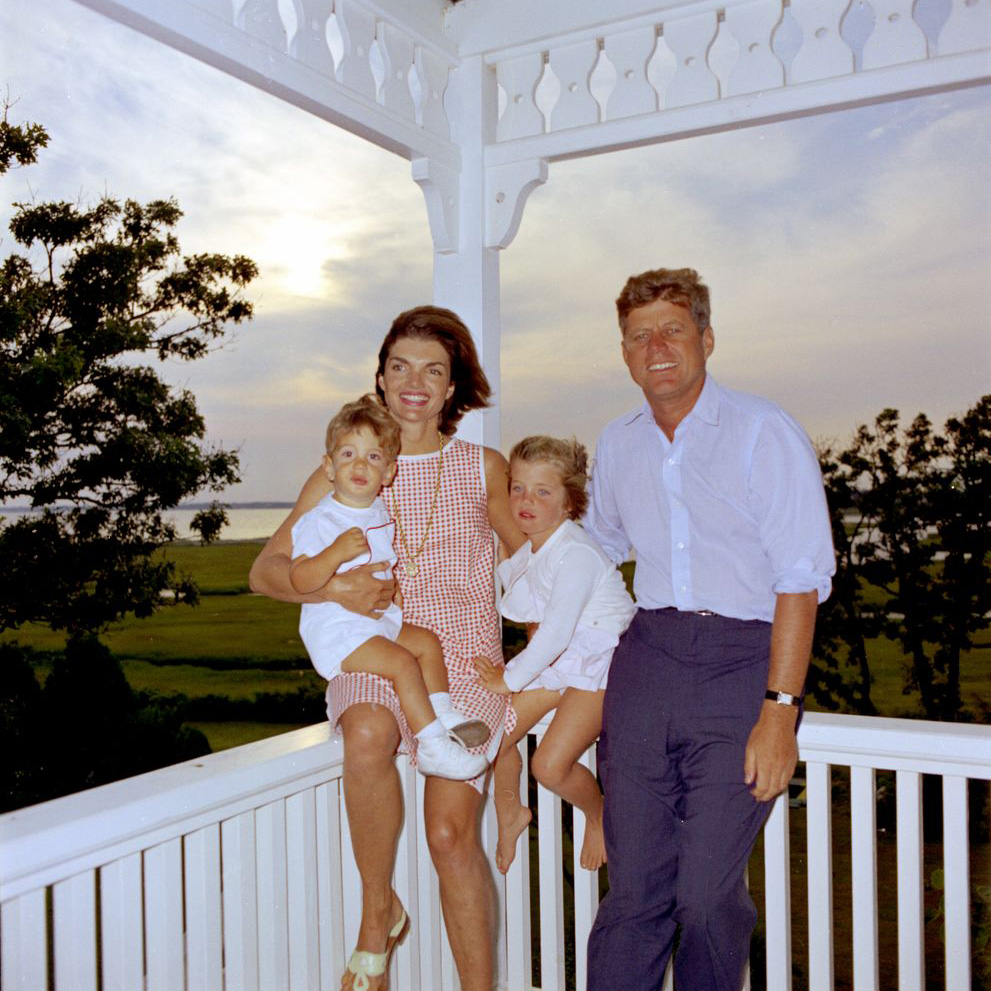
Joseph Kennedy's fortune: business history and bootlegging claims
Joseph P. Kennedy Sr. built substantial wealth through finance, film businesses, real estate, and other commercial ventures. That wealth helped give his family opportunities unavailable to most Americans. The documented business history deserves attention without either romanticizing it or replacing it with rumor. National Park Service, Joseph P. Kennedy biography.
Persistent claims attribute part of the fortune to Prohibition-era bootlegging and organized-crime connections. Importantly, biographer David Nasaw reported finding no evidence substantiating the bootlegging allegation in his research. His conclusion does not prove that every business dealing was beyond criticism; it means the allegation should not be presented as established history. Legal liquor importing after repeal must also be distinguished from illegal activity during Prohibition. Nasaw discussion at the Kennedy Library, December 12, 2012; Account of the liquor business and Nasaw's findings.
This distinction matters to the argument that follows. The CIA–Mafia partnership rests on agency records and congressional investigations. An unsupported story about the Kennedy family's fortune cannot establish a further connection to that partnership or to the assassination.
The responsibility he had already carried
Long before the presidency, Kennedy had been responsible for men whose lives depended on his decisions. In the early hours of August 2, 1943, a Japanese destroyer struck PT-109 in the Solomon Islands. Two crewmen were killed. Kennedy helped the survivors reach an island, towing the badly burned Patrick McMahon with a life-jacket strap held in his teeth. Further efforts to find help preceded their rescue on August 8. He received the Navy and Marine Corps Medal for his courage and leadership, and the Purple Heart for his injuries. National Archives, PT-109 history and original-record sources.
Remarkably, this was leadership measured in exhausted swimmers and responsibility for the wounded, long before it was measured in speeches. That history helps explain the admiration Kennedy inspired. It does not make him flawless or establish who killed him. For this essay, it supplies something different: a reminder of the human being behind the investigation.
What I Believe
I believe the assassination of John F. Kennedy was planned. I believe the men who planned it came from a world the Central Intelligence Agency built in partnership with the American Mafia, a world of deniable murder, middlemen, and silence. And I believe the agency has spent the six decades since making certain that the American people will never see the full record of what it knew.
I cannot prove every link in that chain. That limitation matters: the reader must distinguish the documented circumstances from the conclusion I draw from them. What I can do is lay the documented record side by side, drawn from Senate and House investigations, the Warren Commission's own volumes, sworn testimony, and the CIA's own files, and ask the reader to look at it whole. Lawyers have a phrase for this: the totality of the circumstances. When you see the totality, I think you will arrive where I did. The question is no longer whether the official story has holes. It is whether the agency charged with protecting the country had become something the country needed protection from.
A note on evidence. Where a fact is documented, I state it as fact and cite the record. Where a claim is an allegation or is disputed, I identify its status and preserve that distinction when drawing conclusions. Where I am giving my own judgment, I say that too. The strongest arguments that Oswald acted alone appear near the end, in "The Case for the Defense," and I invite the reader to weigh them.
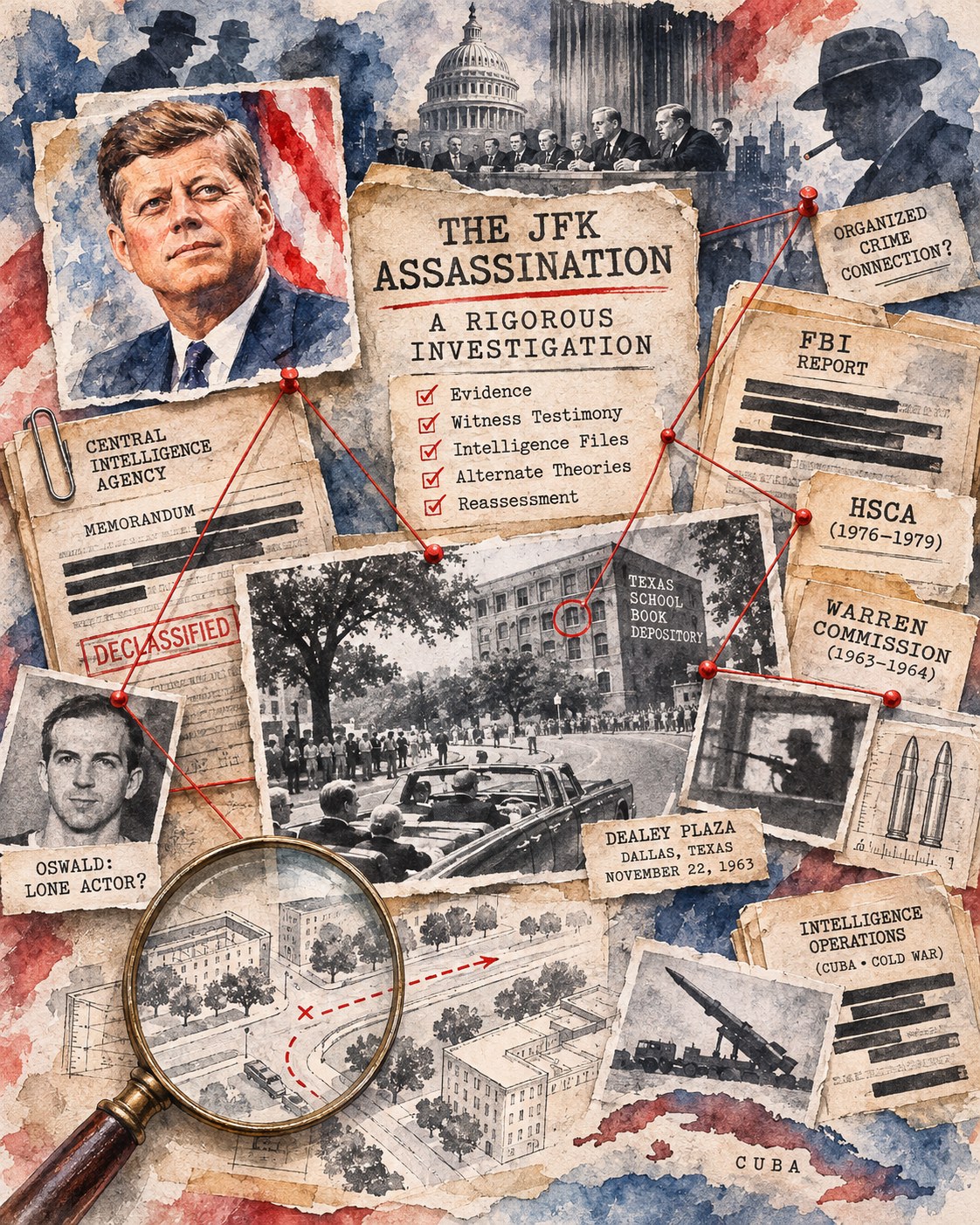
How to read the cumulative case. The argument proceeds through documented capability, possible motives, relevant associations, decisions affecting the evidence, and failures of disclosure. Each category does different work. Capability makes an operation possible; motive can help explain it; neither establishes an agreement. The strongest cumulative inference comes from independently supported connections, not from the number of unanswered questions. This distinction guides the sections that follow.
Prologue: September 14, 1960
Three years before Dallas, in a room at the Hilton Plaza Hotel in New York, a former FBI agent named Robert Maheu sat down with a Las Vegas mobster named Johnny Roselli. Maheu was working for the CIA. With them was a CIA case officer, James O'Connell, introduced as Maheu's employee. The proposition was simple: business interests that had lost fortunes in Cuba would pay $150,000 to anyone who could arrange the "removal" of Fidel Castro. [2]
Deliberately concealed behind that cover story, the client was the Central Intelligence Agency. The CIA's own memorandum records that it was "to be made clear to Roselli that the U.S. Government was not, and should not, become aware of this operation." The agency then used Roselli "in support of operations designed to assassinate Fidel Castro" from September 1960 through February 1963. [2] Roselli brought in the bosses: Sam Giancana of Chicago and Santo Trafficante of Tampa and Havana. [3]
The CIA's own account of the operation, a memorandum titled "The Johnny Roselli Matter," does not mince words. In August 1960, it says, Richard Bissell asked the agency's Director of Security whether he had assets for "a sensitive mission requiring gangster-type action." The target was Fidel Castro. And then: "The DCI was briefed and gave his approval." [1] The DCI was Allen Dulles. Documents the CIA released in 2007 confirm it. [4]
Pause on that. The United States government, through its intelligence service, hired organized crime to murder a foreign head of state. That is not a theory. It is the finding of a United States Senate committee, documented in the CIA's own files. Everything that follows in this essay grows out of that partnership.
"A sensitive mission requiring gangster-type action."CIA Office of Security memorandum, 1960
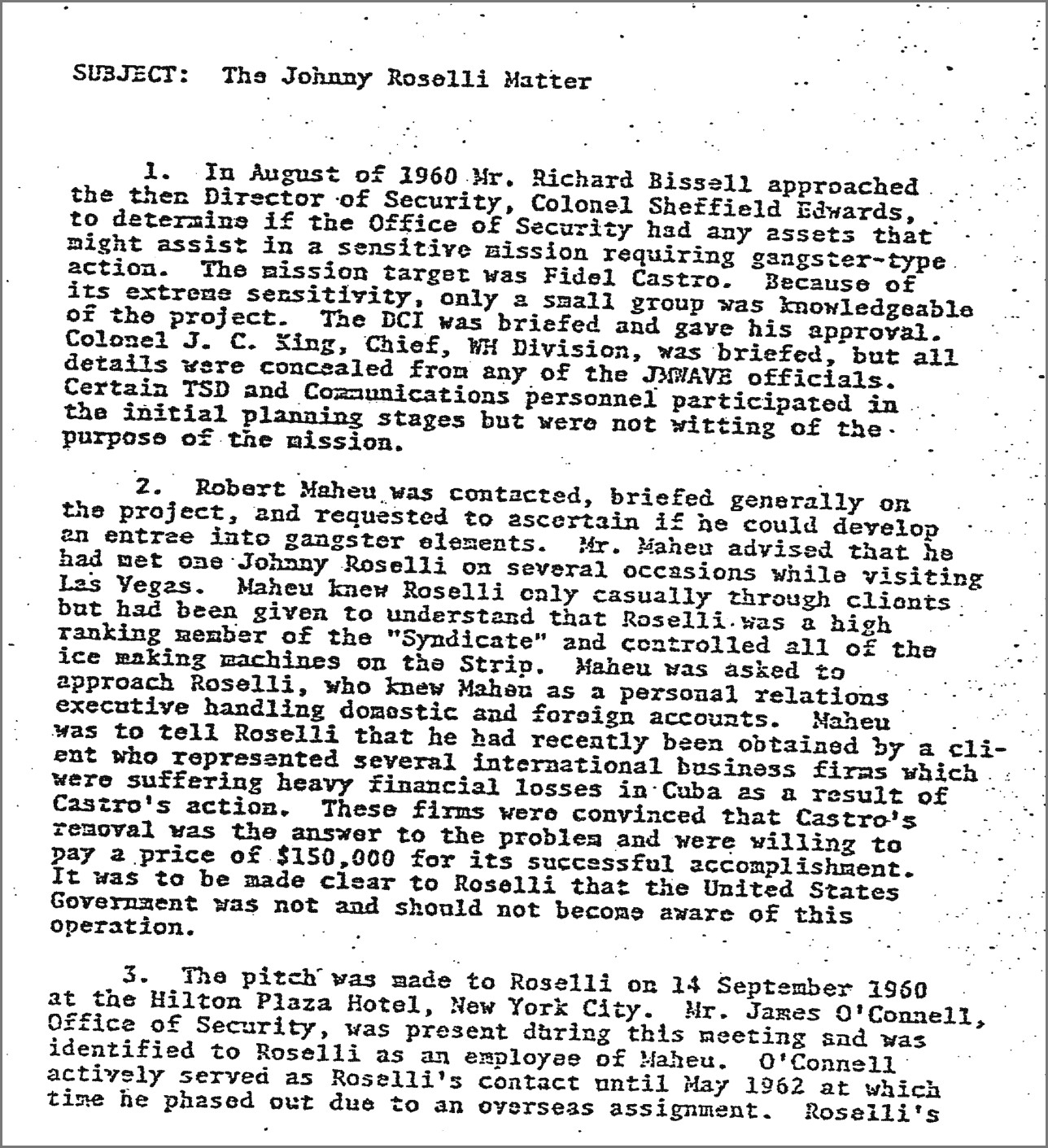
What this establishes. The partnership was real, and deniable assassination was within its purpose. The next question is whether evidence connects that capability to Dallas. The existence of the earlier operation makes that inquiry necessary; it does not supply the missing connection by itself.
Act I. Gangster-Type Action
Disturbingly, what followed reads like a crime novel. Poison pills were prepared in a CIA laboratory and passed toward Havana through Trafficante's Cuban contacts. When the early attempts failed, a CIA task force under William Harvey revived the effort in 1962, with Roselli again as the go-between. [3] The Senate committee that later investigated these operations, chaired by Senator Frank Church of Idaho, found concrete evidence of at least eight CIA plots to kill Castro between 1960 and 1965. [3]
Ten Most Wanted
Chillingly, the CIA's memorandum records the details in flat bureaucratic prose. Its Technical Services Division "was requested to produce six pills of high lethal content." And it records who the agency was now working with. Weeks after Maheu met Roselli's friends in Miami, he saw their pictures in Parade magazine. They were Sam Giancana, "the Chicago Chieftan of the Cosa Nostra and successor to Al Capone," and Santo Trafficante, "the Cosa Nostra boss of Cuban operations." The memo adds: "Both were on the list of the Attorney General's ten most wanted men." [1]
Read that again. The Central Intelligence Agency had gone into the murder business with two men on the Justice Department's most-wanted list.
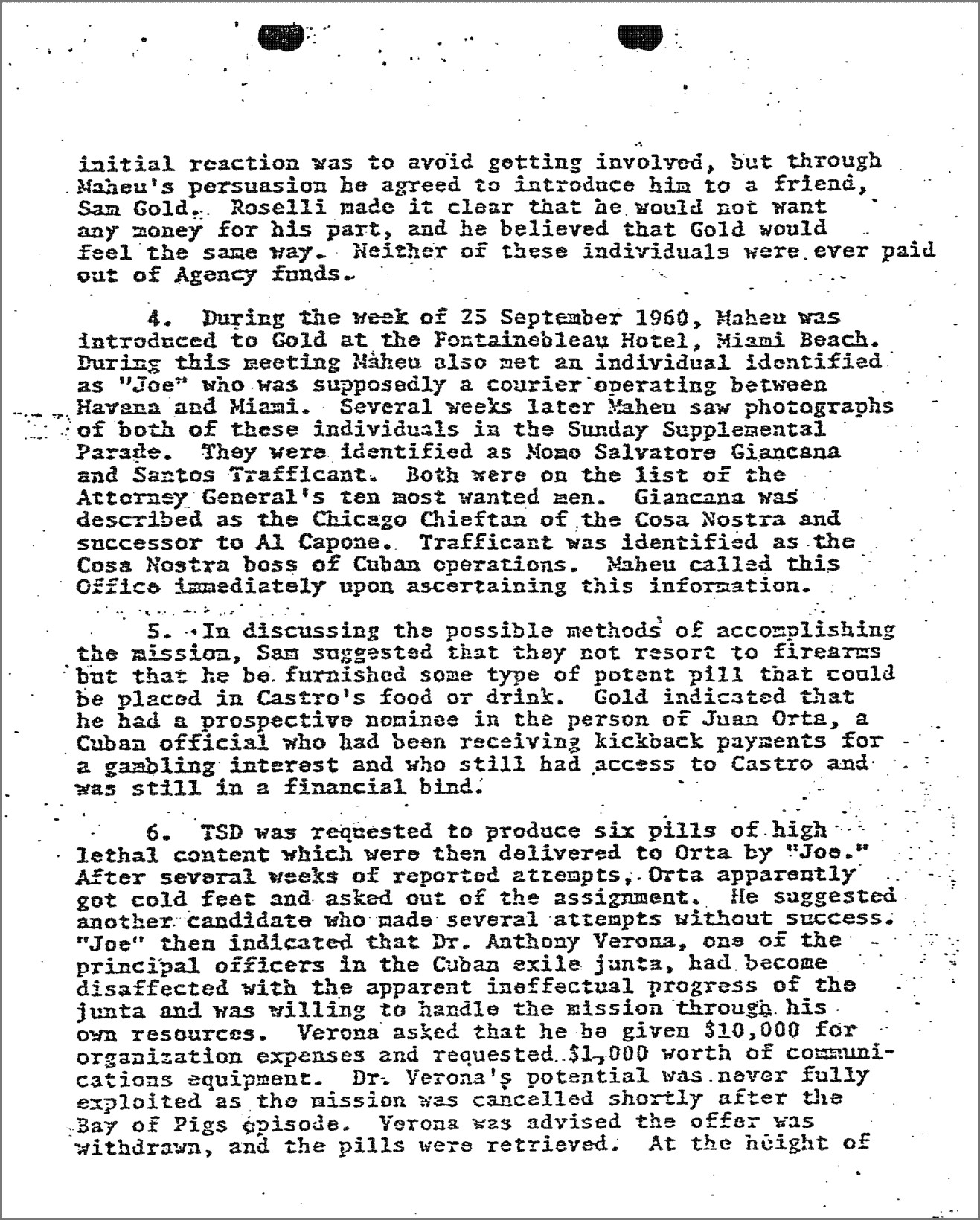
In the Mob's world, a favor for powerful men creates a debt. Whether Giancana and Roselli believed the government now owed them protection, we can only infer. What they got instead was Robert Kennedy.
The President, the Mobster, and Judith Campbell
Then there is the story that, had it appeared in a novel, an editor would have cut as too far-fetched.
Judith Campbell, a young woman from Los Angeles, was introduced to John Kennedy in 1960. She was also involved with Sam Giancana and traveled in Johnny Roselli's circle, the same two men the CIA had hired to kill Castro. The FBI, investigating Giancana and Roselli, learned of her contacts with the mobsters and with the President. White House telephone logs, later compiled in congressional records, show her calls to the White House. [5]
On March 20, 1962, the FBI circulated a memorandum noting that Campbell associated with Giancana and Roselli. Two days later, J. Edgar Hoover had lunch with the President at the White House. No one knows exactly what the two men said when they were alone, but Hoover had made a point of being briefed on Campbell's friendships beforehand. [5]
Consider what that means. The President of the United States and a mobster the CIA had hired to commit murder were involved with the same woman. The Director of the FBI knew. The CIA knew whom it had hired. And the Warren Commission, assembled to explain the President's murder, would hear none of it. [3]
Campbell, later Judith Campbell Exner, claimed years afterward that she had carried messages between Kennedy and Giancana. [5] That courier claim came late and rests on her word alone. The triangle itself does not. It is documented, and it shows how close the partnership came to the Oval Office.
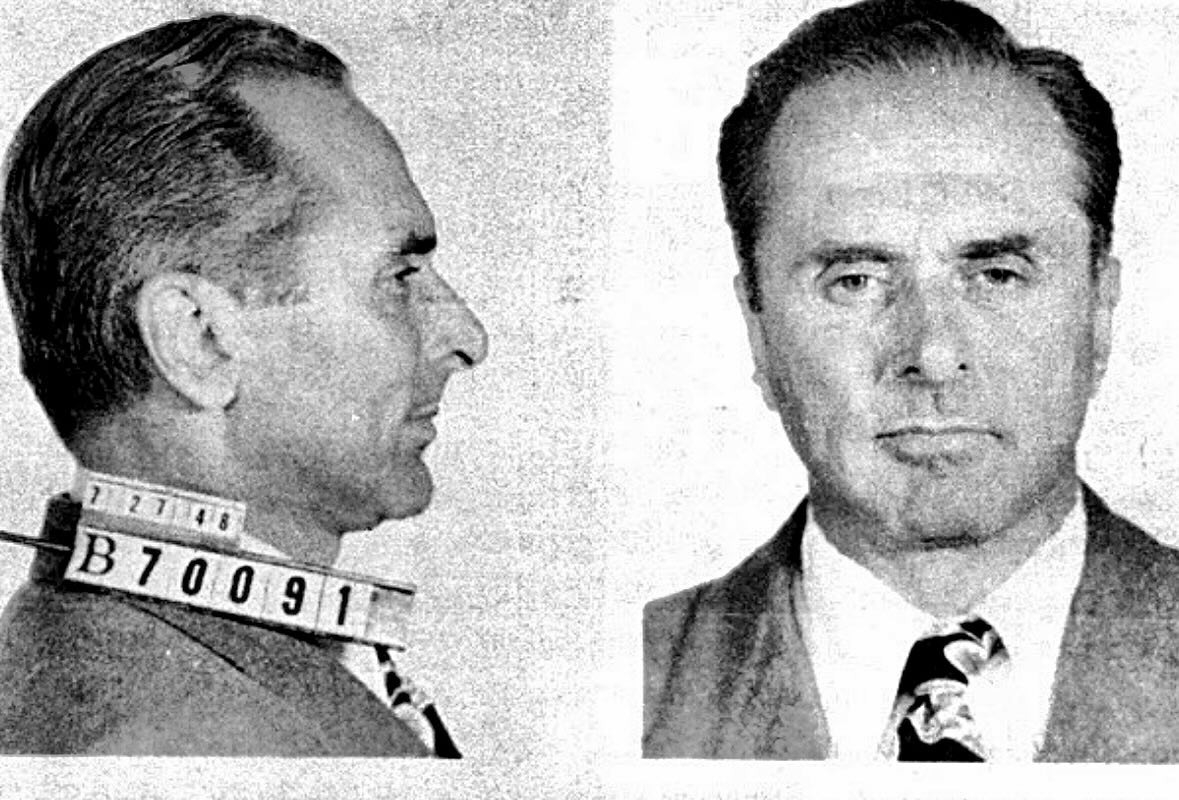
"Six pills of high lethal content."CIA Office of Security memorandum
Why the relationship matters. Intelligence officers and criminal intermediaries had established working channels. That is more concrete than a general assertion that powerful people disliked Kennedy. Its relevance to the assassination still depends on evidence showing who used those channels, for what purpose, and when.
Act II. The Double-Cross
In April 1961 the CIA's invasion of Cuba at the Bay of Pigs collapsed in three days. Many in the agency and the Cuban exile community blamed Kennedy for refusing to commit American forces to save it. Kennedy blamed the agency. Subsequently, within a year, the three senior officials who had overseen the operation were gone. John McCone replaced Allen Dulles as director in November 1961. Deputy Director Charles Cabell left in January 1962. Richard Bissell, who ran the agency's covert operations, resigned in February 1962. [6]
Remember who those men were. Dulles, Cabell, and Bissell were the officials who had approved and overseen the CIA's partnership with the Mob. [3] The President had fired Dulles, and the senior leadership associated with the failed invasion was being replaced.
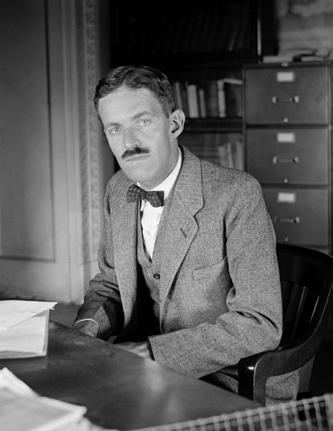
The Attorney General's War
At the same moment, the President's brother was making war on the other partner. Robert Kennedy had already confronted these men as chief counsel to the Senate Rackets Committee in the late 1950s. As Attorney General, he turned the Justice Department loose on organized crime, and he made no secret of whom he was after.
On April 4, 1961, Carlos Marcello, the boss of New Orleans, walked into an immigration office for what he thought was a routine check-in. He was arrested and flown to Guatemala the same day, on the strength of a birth certificate the government knew to be false. The court record of Marcello's lawsuit against the Attorney General documents the summary deportation. [7] He was back in New Orleans within two months. A witness later examined by the House Select Committee on Assassinations claimed that Marcello spoke of having the President killed in 1962; the witness himself doubted Marcello could carry it out. [8]
Santo Trafficante, one of the CIA's partners in the Castro plots, was the subject of a similar account. A Cuban exile named José Aleman told House investigators in 1977 that Trafficante had said in 1962 that Kennedy would not be re-elected because he was "going to be hit." When Aleman later testified publicly, he hedged and said he feared for his life. [8]
Operation Northwoods: A Documented Proposal for Manufactured Pretexts
On March 13, 1962, Joint Chiefs chairman General Lyman L. Lemnitzer sent Defense Secretary Robert McNamara a memorandum titled “Justification for U.S. Military Intervention in Cuba.” The Northwoods proposals contemplated manufactured incidents to justify intervention, including staged attacks, a real or simulated sinking of Cuban refugees, and a fabricated civilian-aircraft incident using an unmanned substitute. This was a proposal endorsed by the Joint Chiefs, not an authorization to execute it. Original memorandum and enclosures; National Security Archive provenance and context.
Northwoods removes one comforting assumption: that manufacturing incidents to justify war was beyond consideration at the highest military levels. The surviving proposal demonstrates otherwise. Its significance is the documented willingness to consider deception of that magnitude. It does not establish that the proposals were carried out, that Kennedy approved them, or that they were connected operationally to his assassination.
A March 16, 1962 meeting record describes discussion of plausible pretexts and Kennedy's resistance to discussing the use of U.S. military force. That record should not be expanded into an unsupported account of exactly how Kennedy and McNamara rejected every Northwoods proposal. Likewise, Lemnitzer's subsequent reassignment is not, without further evidence, proof that it was punishment for this memorandum. Lansdale memorandum of the March 16 meeting.
The relevance to this argument. Northwoods is historical context for the capacity to propose deception and the importance of civilian oversight. It makes scrutiny of official assurances reasonable. It does not supply the missing link to Dallas. A cumulative circumstantial argument must distinguish evidence of a contemplated method from evidence that the method was used in the crime under examination.
A Back Channel to Castro
Meanwhile, Kennedy began, quietly, to talk to the enemy. In 1963 his administration explored contacts with Castro's government through the diplomat William Attwood, even as the CIA's covert war against Cuba continued. In October he approved National Security Action Memorandum 263, which provided for withdrawing 1,000 American military personnel from Vietnam by the end of the year. [9]
Picture the situation from the other side of the table in the fall of 1963. The CIA's old leadership had been driven out. The Mob bosses who had served the CIA were being deported, prosecuted, and wiretapped by the President's brother. The exiles who had bled at the Bay of Pigs watched the President explore a deal with Castro. Every partner in the 1960 arrangement had a grievance against the Kennedys.
The House Select Committee on Assassinations reached a remarkable conclusion in 1979. It found that Carlos Marcello, Santo Trafficante, and the Teamsters' Jimmy Hoffa each "had the motive, means, and opportunity" to plan and execute a conspiracy to assassinate President Kennedy, although it could not establish direct evidence that any of them did. [8] The committee's chief counsel, G. Robert Blakey, was blunter when the report came out. He is widely quoted as saying, "The mob did it." [10]
A grievance is not a capability, and a capability is not a crime. But by November 1963 the men with the grievances had the means, and the CIA had spent three years showing them how it liked its killing done: through middlemen, deniably, with nothing leading back to Washington. [2]
Motive and opportunity require a bridge. The grievances described here give particular actors possible reasons for hostility. They do not prove a common plan. The cumulative argument becomes stronger only where an identified relationship or documented act connects those grievances to events surrounding the assassination.
Act III. Dallas
The Man in the Middle
Lee Harvey Oswald was no stranger to the United States government. He had defected to the Soviet Union in 1959 and returned in 1962, and the CIA had been reading his mail since his defection. [11]
In the summer of 1963, in New Orleans, Oswald handed out pro-Castro leaflets and got into a public confrontation with members of the DRE, the Cuban Student Directorate, an anti-Castro exile group. The DRE was funded by the CIA. Its CIA case officer, the man its members knew only as "Howard," was George Joannides. After the confrontation, DRE members challenged Oswald to a radio debate and, according to DRE records, sent a tape of it to Howard. When news broke that Oswald had been arrested for the President's murder, according to a DRE leader's account to The Washington Post, the group's leaders called Howard, who told them to go to the FBI and then alert the press to Oswald's pro-Castro activities. They did. [11]
In late September 1963, Oswald traveled to Mexico City and visited the Cuban and Soviet embassies. The CIA was watching. Its Mexico City station history, released in full only in 2025, details that coverage, and the historian Philip Shenon has described the agency's surveillance of Oswald there as aggressive. [12] By early November, the FBI knew where Oswald worked. [13]
On October 16, Oswald started work at the Texas School Book Depository, overlooking Dealey Plaza. Significantly for the chronology, the job came through a neighbor of Ruth Paine, the woman Oswald's wife was living with. [13] There is no documentary evidence that anyone arranged it to put him on the route. But five weeks later, the President's car would pass directly beneath its windows.
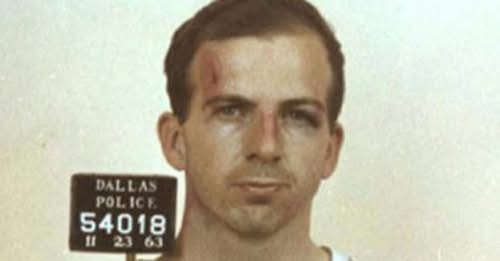
The Killing Ground
The motorcade route was approved on November 18 and printed in both Dallas newspapers on November 19. [14] Anyone who could read knew exactly where the President would be. That fact is usually offered to prove there was no conspiracy. I read it the other way. A published route through downtown Dallas, in an open car, past buildings no one had systematically inspected, was not protection. It was an invitation. [15]
At the end of Main Street, the motorcade turned right onto Houston Street and then made a sharp left onto Elm, directly beneath the Depository. By the Warren Commission's own account, the President's car was moving at about 11 miles per hour as it started down Elm Street. [14] The Commission also acknowledged that the buildings along the route had not been systematically inspected. [15] This was a city where, only a month earlier, a hostile crowd had surrounded and struck the U.S. Ambassador to the United Nations, Adlai Stevenson. [15]
Who approved a route that slowed the President of the United States to a crawl, in an open car, below hundreds of unsecured windows, in that city? The planners knew the route. So did everyone else. In my judgment, that is not evidence against a plot. It is the reason a plot could work.
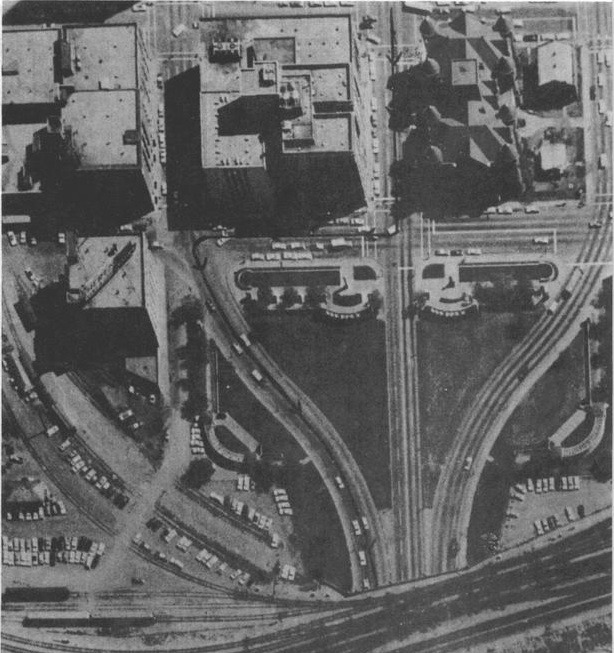
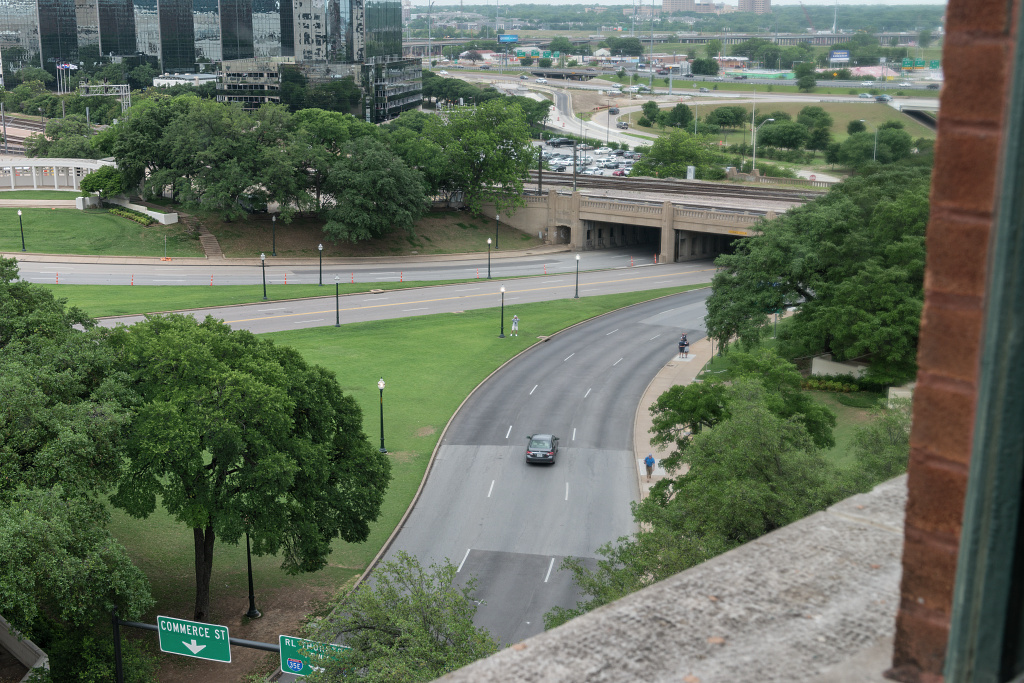
Twelve-Thirty
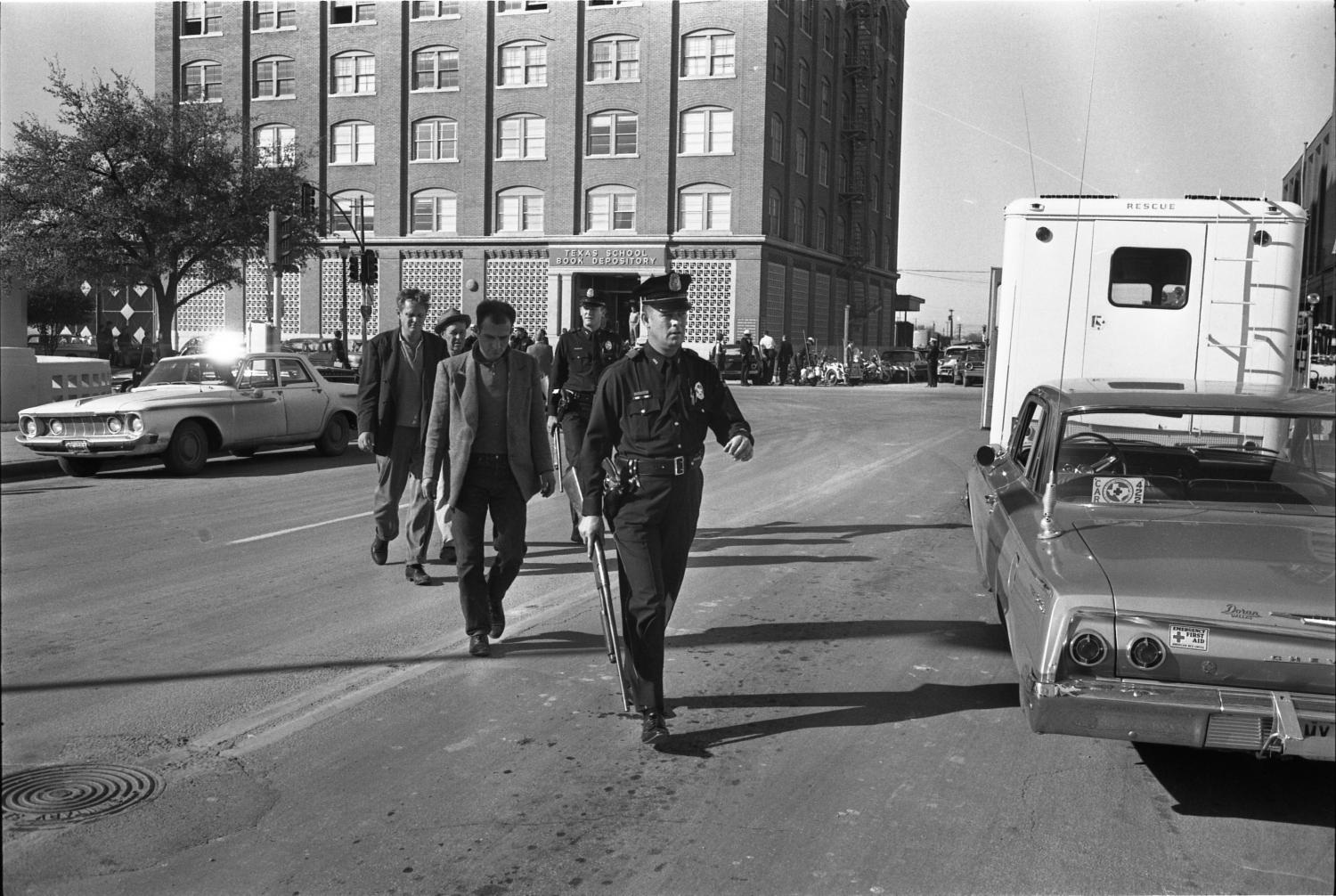
At 12:30 p.m. the shots came. Kennedy was struck in the neck and then in the head. Witnesses ran toward the grassy knoll and the stockade fence to the right of the motorcade, convinced the shots had come from there. [16] Behind the Depository, Dallas officers detained three men near the railroad cars. Their identities would not be publicly established until the city released its records in 1992. [17]
About forty-five minutes after the President was shot, Dallas police officer J. D. Tippit was killed in the Oak Cliff neighborhood. Oswald was arrested in a movie theater shortly afterward. [14]
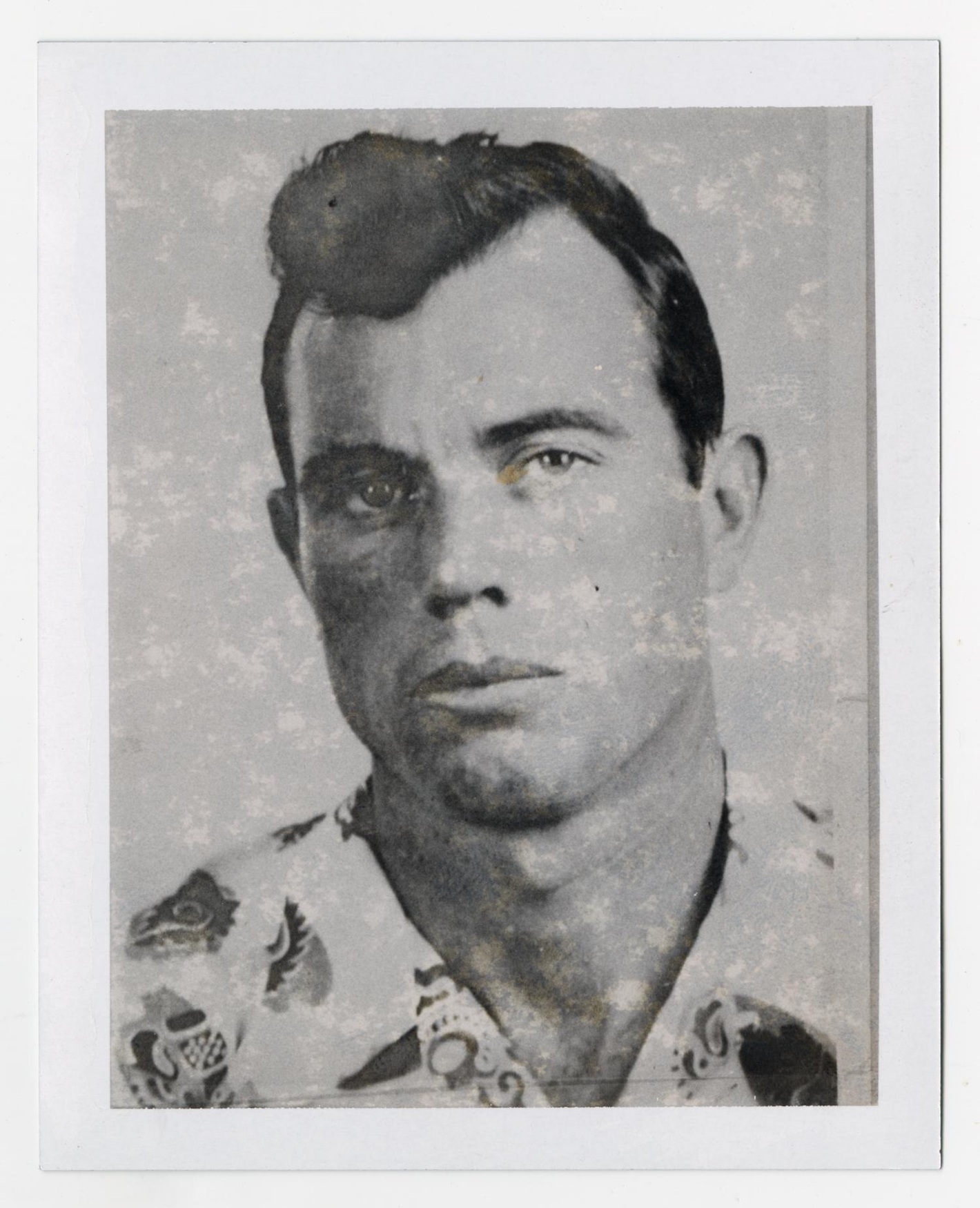
At Parkland Hospital, Dallas County medical examiner Earl Rose insisted that Texas law required a local autopsy. Secret Service agents and presidential aides removed the body over his objection and flew it to Washington, where the autopsy took place that night at Bethesda Naval Hospital. The presidential limousine was taken away and later rebuilt. Autopsy materials, including the President's brain, later went missing. [18] In a homicide investigation anywhere else in America, each of these would be a scandal. In this one, they became footnotes.
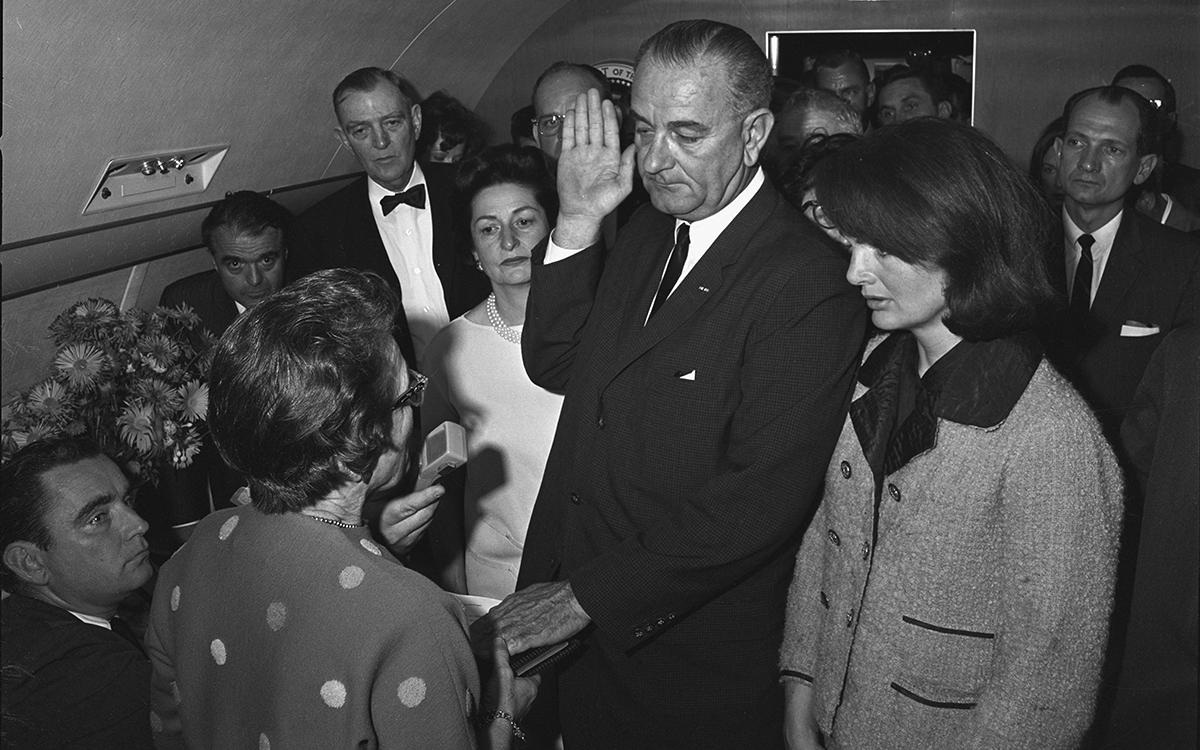
Before Air Force One left Love Field, Lyndon Johnson took the oath of office with Jacqueline Kennedy beside him.
Silenced in a Basement
Oswald publicly called himself "just a patsy." Tragically, he never lived to present a defense at trial. On Sunday morning, November 24, Jack Ruby, a Dallas nightclub owner, walked into the basement of Dallas police headquarters and shot Oswald dead on live television. [19]
The Warren Commission concluded that Ruby acted alone and found no significant link between Ruby and organized crime. Fifteen years later, the House Select Committee disagreed. It found that Ruby had a significant number of associations with organized crime figures, some of them connected to the most powerful Mafia leaders. Its computer analysis of Ruby's telephone records showed a sharp rise in his long-distance calls in October and November 1963, including calls to Irwin Weiner, a Chicago bondsman it described as well known as a front man for organized crime and the Teamsters, and to Robert "Barney" Baker, a lieutenant of Jimmy Hoffa. The committee said it was not satisfied with the explanations given by three men closely associated with organized crime who received Ruby's calls. It also found fault with the Warren Commission's conclusion that Ruby had entered the basement unaided. [8]
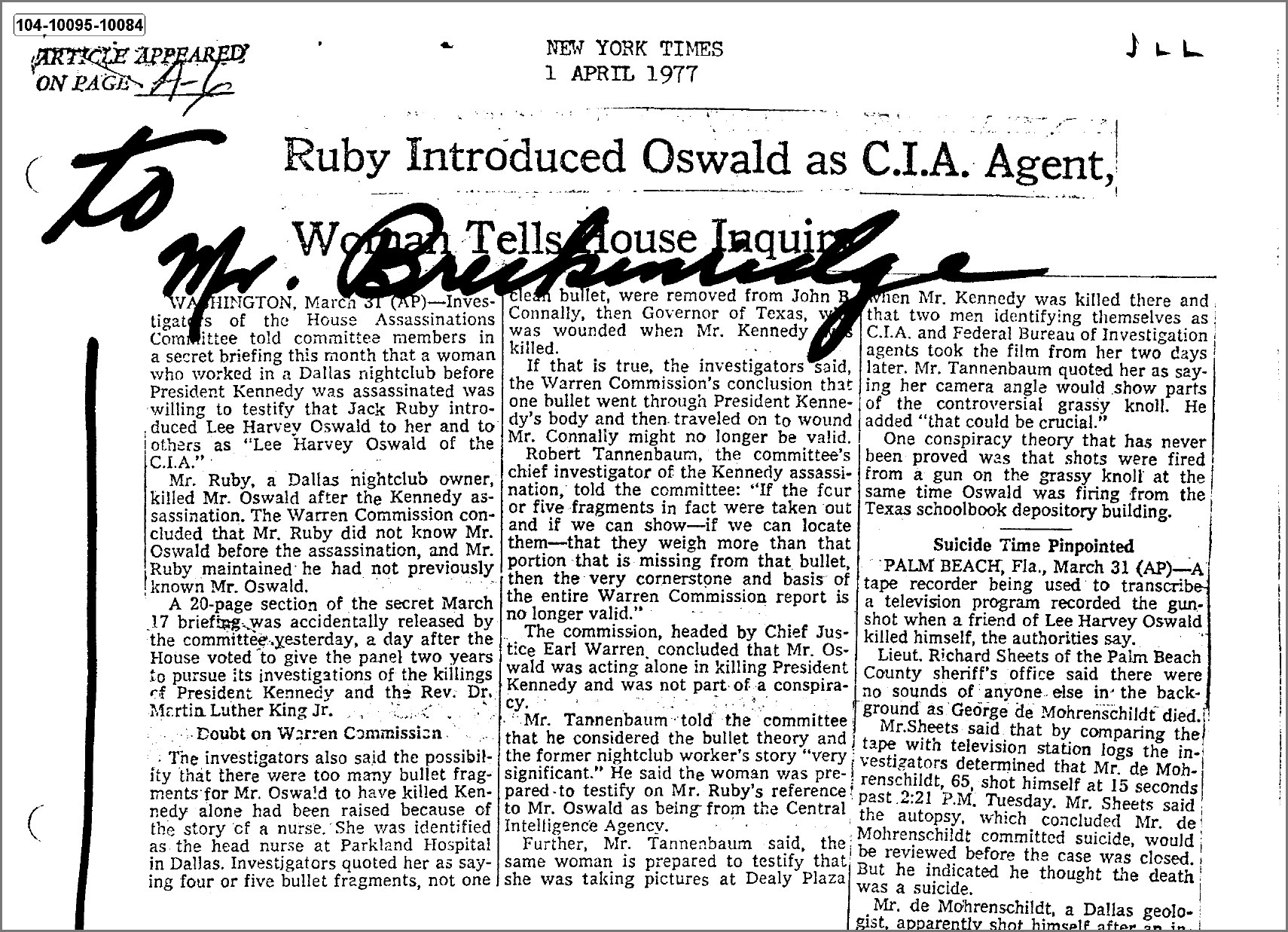
Then came an allegation that went to the heart of it. In March 1977, in a closed briefing, House investigators told committee members that a woman who had worked in a Dallas nightclub before the assassination was willing to testify that Jack Ruby had introduced Oswald to her and to others as "Lee Harvey Oswald of the C.I.A." She also said she had filmed in Dealey Plaza that day, and that men who identified themselves as C.I.A. and FBI agents took her film. The committee's chief investigator called her story "very significant." The New York Times reported it on April 1, 1977. The CIA clipped the article and kept it in its files. [20]
It is an allegation, and nothing in the committee's final findings established that the introduction took place. But it shows how close to the surface the question ran: the man who silenced Oswald may have known exactly who Oswald was.
The man who silenced Oswald came from the Mob's world. The man he silenced had spent the summer tangled with a CIA-funded group. In my interpretation, these associations bring the two worlds of the earlier partnership into troubling proximity. They do not establish that anyone sent Ruby. That missing link is central, and I will not pretend it has been proved.
While Kennedy Is Shot
There is one more scene from November 22 that the Warren Commission never heard about.
In Paris that day, a CIA case officer met Rolando Cubela, a high-ranking Cuban official code-named AMLASH, who had offered to kill Castro. The officer offered him a ballpoint pen rigged as a hypodermic syringe, designed to deliver poison. The State Department's official history records it plainly: a CIA officer was passing an assassination weapon to Cubela "at the very hour that President Kennedy was shot." [21]
The CIA's own Inspector General recorded the moment in 1967, in a single line of a table of contents: "Sanchez gives to Cubela in Paris while Kennedy is shot." The line above it: "Gunn converts a ballpoint pen into a hypodermic syringe." And further down the same page, the operation circles back to the Mob: "Second case-line between Cubela and gambling syndicate operation." [22]
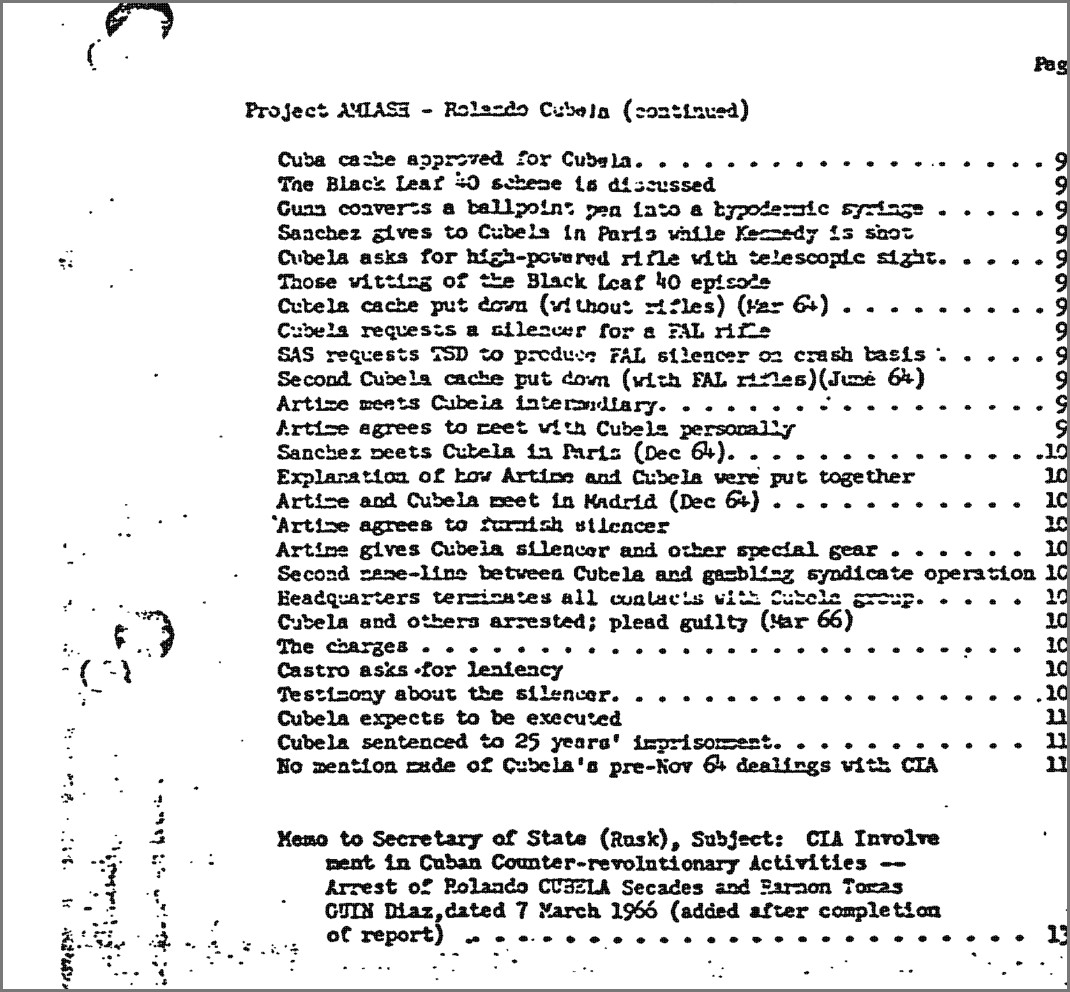
While the President's government was trying to murder Castro, someone murdered the President. The commission charged with finding out who was never told. [23]
"Sanchez gives to Cubela in Paris while Kennedy is shot."CIA Inspector General's report, 1967
The investigative question. Ruby's killing of Oswald, the accused man's surrounding contacts, and the CIA's undisclosed operations demanded separate investigation. Their proximity in this narrative is a reason to test connections, not proof that every participant belonged to one operation. A convincing account must explain the evidence against Oswald as well as the questions around him.
Act IV. The Cover-Up
The record of withheld information is substantially firmer than the argument identifying the President’s killers. The distinction is essential.
The Commission and the Man Kennedy Fired
A recurring curiosity. Johnson appointed the CIA director Kennedy had fired to the inquiry into Kennedy's death. The appointment is documented; my concern is whether institutional familiarity was permitted to stand in for sufficiently independent scrutiny.
One week after the assassination, President Johnson created the Warren Commission. Among its seven members was Allen Dulles, the former CIA director Kennedy had fired, the man who had approved the CIA's partnership with the Mafia. [4]
The Commission was never given a full account of the Castro assassination plots. [3] Dulles knew about them. Richard Helms, the CIA's deputy director for plans in 1963, knew about AMLASH. The Senate committee later found that Helms was the only CIA official who was both in contact with the Warren Commission and aware of the AMLASH operation, and he did not tell the Commission. He later told the Senate committee, in effect, that he had not been asked. [23]
Ask yourself how a commission could weigh whether Castro, the exiles, or the Mob had reason to kill Kennedy when the one fact that tied them all together, that the CIA had hired the Mob to kill Castro, was kept from it. In 1976 the Church Committee concluded that facts which might have substantially affected the course of the investigation had not been provided to the Warren Commission. [23]
Deliberately Misled
A further curiosity. An officer whose earlier role warranted investigation later became the agency's liaison to the investigators. The significance lies in what they were told about him and what information they received, not simply in the coincidence of a name.
In 1978 the House Select Committee on Assassinations reopened the case. Its investigators wanted the CIA's files on the DRE, the group that had tangled with Oswald. The CIA assigned an officer to serve as liaison and handle their requests. That officer was George Joannides: Howard himself, the man who had run the DRE in 1963. [11]
Crucially, the committee was not told of his earlier role. Former HSCA investigator Dan Hardway testified in 2025 that investigators were told Joannides had no connection to any aspect of the Kennedy case, and that the CIA assured them it had no working relationship with the DRE. Hardway also testified that access to CIA files became slower and more restricted after Joannides took over. [24] In 1981, the CIA awarded Joannides its Career Intelligence Medal.
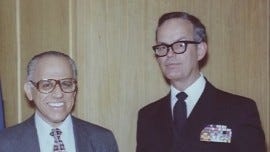
When the Assassination Records Review Board pursued the question of "Howard" in the 1990s, a CIA memorandum told it the agency had no record of him. [11] Judge John Tunheim, who chaired the Review Board, testified before Congress in 2025: "we had been deliberately misled by the CIA as to the nature of the Joannides files." [24]
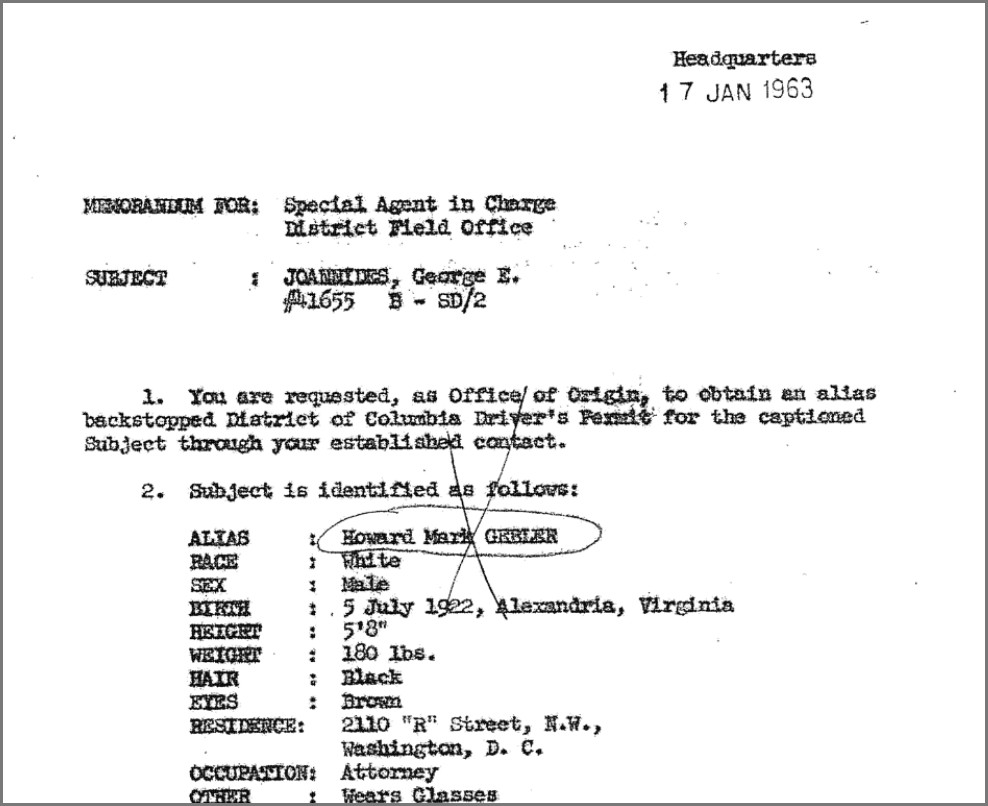
Then, in July 2025, the CIA released Joannides's personnel file. It contained a memorandum dated January 17, 1963, arranging an alias driver's license for him in the name "Howard Mark Gebler." [11] The Howard the agency had denied for decades had been in its own files all along.
The memo is worth seeing. Someone at the CIA drew a circle by hand around the alias. A note at the bottom records that the request had come in by cable from JMWAVE, the CIA's Miami station, the station that ran the agency's war on Castro, and the station from which Joannides handled the DRE. [25]
J. Barry Harrelson, the former CIA official who wrote the memorandum denying that Howard existed, has said his memo was wrong but that the error was not deliberate, and that he had not been given Joannides's personnel file. [11] Take him at his word. Then ask the harder question: who decided he would not see it?
"We had been deliberately misled by the CIA."Judge John Tunheim, chairman of the Assassination Records Review Board, testifying to Congress, 2025
Sixty Years of Withholding
Congress had to pass a law, the President John F. Kennedy Assassination Records Collection Act of 1992, to force the agencies to give up their files. The agencies kept asking for more time. Most of the remaining redactions were lifted only in March 2025, more than sixty years after Dallas. That same year the FBI disclosed that it had found about 2,400 assassination-related records that had never been given to the Review Board. [26]
In May 2026, a serving CIA officer, James E. Erdman III, alleged in written testimony to the Senate that after a declassification group at the Office of the Director of National Intelligence was shut down, the CIA took back 40 boxes of JFK assassination records that were being processed for release, and that those records had not yet been released. He separately alleged that the agency took back MKULTRA records. According to the National Security Archive, both the CIA and the office of the Director of National Intelligence disputed his account. Rep. Anna Paulina Luna, who visited CIA headquarters afterward with another member of Congress, said lawmakers had received "conflicting information" about at least 11 of the boxes. [27]
The allegation remains disputed and unresolved. Its existence is not evidence that it is true; it identifies a concrete claim requiring records and testimony to resolve. In 2026, Americans are still arguing about whether the CIA has handed over its Kennedy files.
The Review Board's own final report shows what that fight looked like. In 1992 the CIA reviewed a memo on its Mexico City station's "delay in sending the first cable about Oswald" and released it with most of its substance blacked out. After the Board stepped in, the same page was released in full in 1995. What the CIA had hidden was how its station watched Oswald in Mexico City. And when the Board moved to release more, the same report records, "the CIA did object, but did not offer evidence of the harm to national security that it believed would result from disclosure." [28]
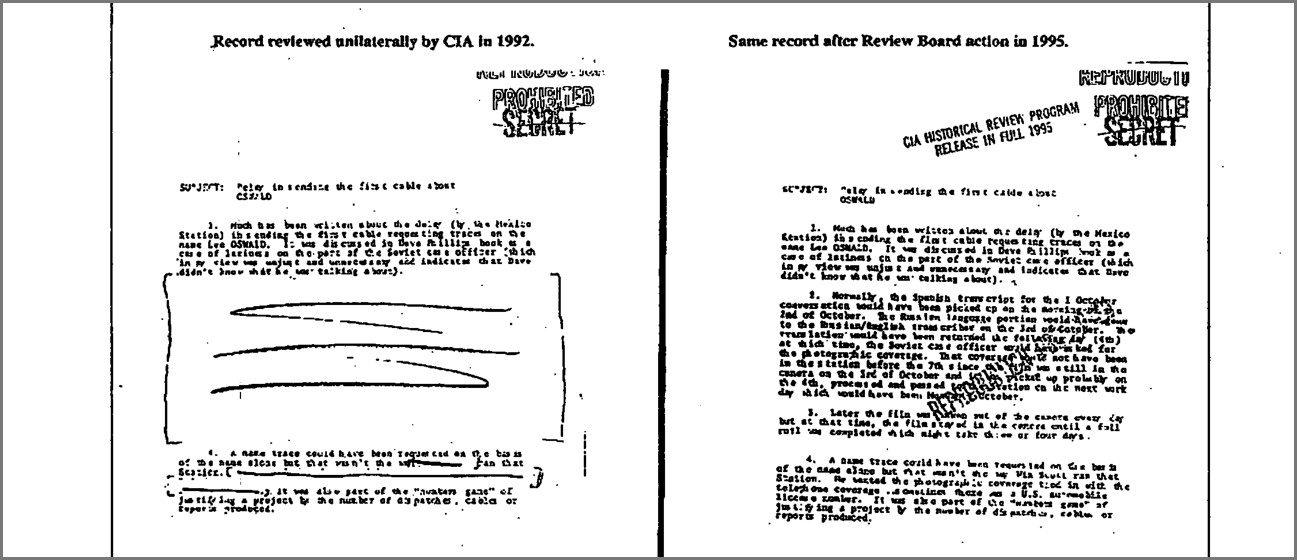
The consequence of incomplete disclosure. An inquiry cannot reliably eliminate a possibility it has not been equipped to examine. Withholding relevant operations and relationships can therefore undermine the completeness of a finding even where it does not establish the withholder's participation in murder. That is the central evidentiary consequence of this section.
Act V. The Silence
Omertà is the Mafia's code of silence. Break it, and you die. In the years after Dallas, the men who knew the partnership's secrets did not live to share them.
Giancana
In 1975 the Senate finally turned its attention to the CIA's assassination plots, and Sam Giancana was to be questioned about the CIA-Mafia partnership. On the evening of June 19, 1975, as Senate committee staff were in Chicago preparing to bring him to Washington, Giancana was shot in the back of the head while cooking in the basement of his home in Oak Park, Illinois. The columnist William Safire observed at the time that Giancana may have been the only person in American history murdered just before he was to appear before a congressional committee. The killing has never been solved. [29]
Roselli
Johnny Roselli did testify. He told the Senate committee about the Castro plots in 1975, and in April 1976 he was questioned about the Kennedy assassination itself. On July 28, 1976, he left his sister's home in Florida and disappeared. Days later, fishermen found a 55-gallon steel drum floating in Dumfoundling Bay near Miami. Roselli's body was inside. The drum had been wrapped in chains and punctured so it would sink; the gases of decomposition brought it to the surface. Attorney General Edward Levi ordered the FBI to determine whether Roselli's testimony had led to his murder. [30] No one was ever charged.
Two men from the 1960 partnership. Both summoned by the Senate. Both murdered, one before he could testify and one after.
The Man Who Says He Did It
In 1994, in a videotaped interview at an Illinois prison, a convict named James Files, also known as James Sutton, told the producer Bob Vernon that he had shot President Kennedy from behind the stockade fence on the grassy knoll. Files said he had gone to Dallas with Charles Nicoletti, a Chicago Outfit gunman, as his driver and backup, and that he did as Nicoletti told him. "Whatever he said do, I would do," he said. He named Nicoletti as a second gunman and claimed a role for Johnny Roselli. He told the story again in 2003. [31]
Files also claimed that he bit down on his spent cartridge case and left it on the fence. Vernon's submission to the Assassination Records Review Board describes a .222-caliber casing reportedly found near the fence in 1987, years before Files told his story. [31]
Here is what holds up, and what does not. The man Files named was real. Charles Nicoletti was one of the Chicago Outfit's most feared hit men, and he worked under Sam Giancana, the boss the CIA had hired to kill Castro. [32] But according to a UPI report preserved in Review Board records, the FBI rejected Files's claim as lacking credibility, and I found no independent evidence placing Files in Dealey Plaza that day. [31] A shot from the knoll is hard to square with the House committee's medical finding that the bullets came from behind. [18] And a casing reportedly picked up twenty-four years later has no chain of custody back to 1963.
Files may be a liar, or a man telling a story he heard rather than lived. But the gunman he named was real, and on March 29, 1977, someone shot him dead.
That evening, Nicoletti was sitting in his car in the parking lot of a restaurant in Northlake, Illinois, when he was shot three times in the back of the head. His car caught fire, and he was pulled from the burning wreck. [32] The murder has never been solved. That same day, in Florida, George de Mohrenschildt, Oswald's friend in Dallas and a man with documented contacts with a CIA officer, died of a gunshot wound, ruled a suicide, on the day a House committee investigator came looking for him. [33]
Giancana in 1975. Roselli in 1976. Nicoletti and de Mohrenschildt on the same day in 1977, as the new House committee was gearing up. Four men, four violent deaths, in less than two years.
The Others
Others who stood close to the case died in circumstances that have fed suspicion ever since.
- Jack Ruby died in custody of a pulmonary embolism on January 3, 1967, after being diagnosed with cancer. His conviction had been overturned and a new trial ordered. [19]
- David Ferrie, whom New Orleans District Attorney Jim Garrison was investigating, died in February 1967. The coroner reported a cerebral hemorrhage. [8]
- Dorothy Kilgallen, the columnist who had interviewed Ruby, died on November 8, 1965. The medical examiner attributed her death to alcohol and barbiturates and left the circumstances undetermined. Later accounts say she had entrusted notes to her friend Florence Pritchett Smith, who died the next day. [34]
These deaths deserve individual examination, not an assumption that all had a common cause. Giancana and Roselli were murdered; other deaths had different official findings. Their loss plainly limited later questioning, but timing alone does not establish who caused a death or why.
Loss of testimony is not proof of a common execution order. These deaths ended opportunities for questioning, but their timing, causes, and links to an investigation differ. The cumulative argument must count what each death actually establishes and resist treating every lost witness as independent confirmation of one plot.
Act VI. How the CIA Became What It Hired
In July 1975, Senator Frank Church, chairman of the Senate committee investigating the intelligence agencies, described the CIA as "a rogue elephant rampaging out of control." [35] He had seen the files. He knew about the poison pills, the Mafia contracts, and the plots against foreign leaders. [3]
The Mafia runs on a few rules. Do the dirty work through middlemen, so nothing leads back to the boss. Keep no records that can hang you. Lie to investigators. Reward loyalty. Above all, keep silent. Measure the CIA's conduct against that list.
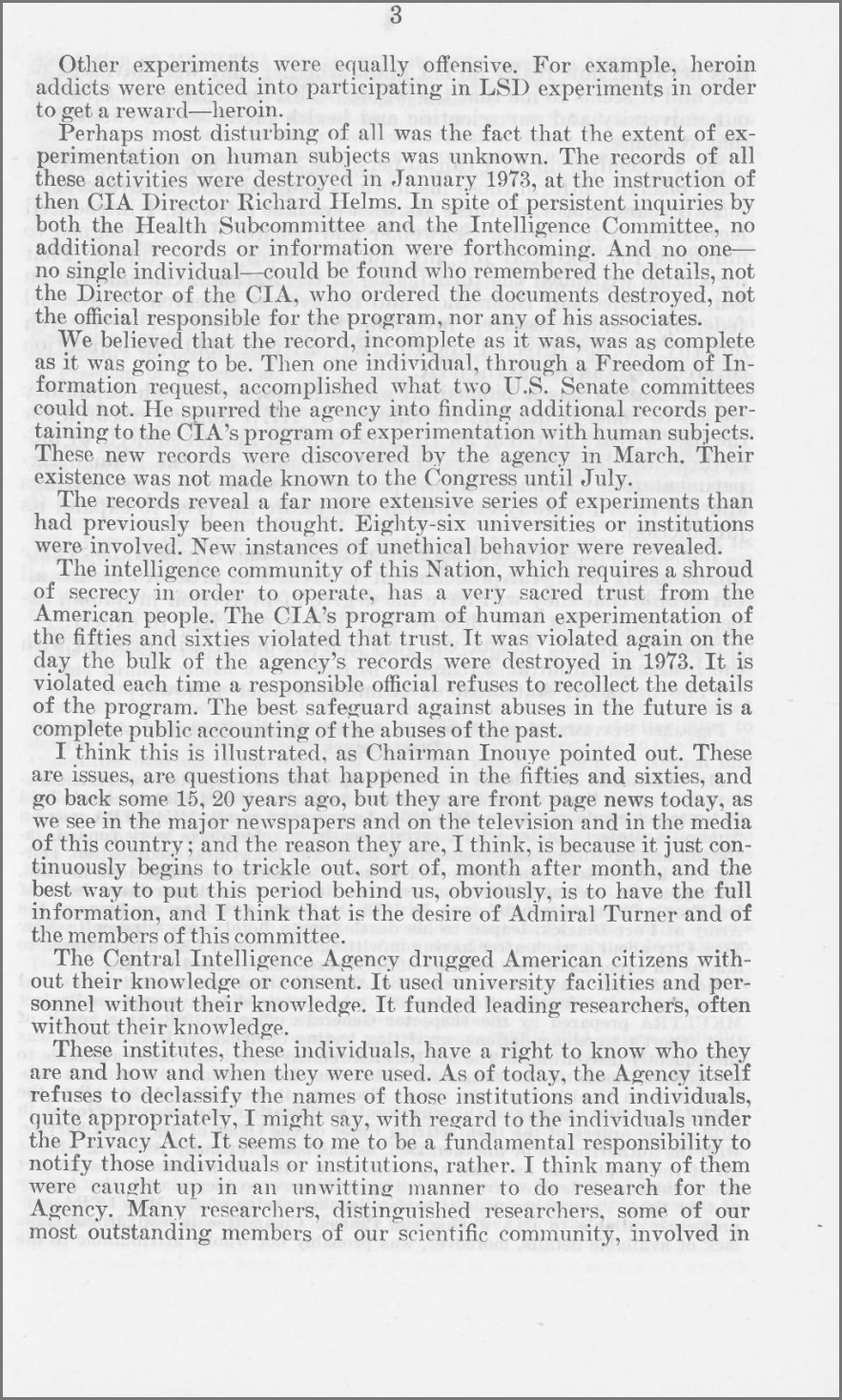
"The Central Intelligence Agency drugged American citizens without their knowledge or consent."Senator Edward M. Kennedy, 1977
Middlemen? In 1960 the CIA hired the Mob precisely so that, in the words of its own memorandum, the U.S. government "was not, and should not, become aware" of the operation. [2]
No records? In January 1973, CIA Director Richard Helms ordered the destruction of the files of MKULTRA, the agency's program of drug and behavior-control experiments, which included drugs given to Americans without their knowledge. Most of the records were destroyed. The program's scope became known only because a cache of documents survived and surfaced through a Freedom of Information Act request in 1977. [36]
When the Senate held hearings on those surviving files in August 1977, one of the presiding senators was Edward Kennedy, the murdered President's youngest brother. "The Central Intelligence Agency drugged American citizens without their knowledge or consent," he said. And of the files: "The records of all these activities were destroyed in January 1973, at the instruction of then CIA Director Richard Helms." [36]
Lie to investigators? The CIA kept the Castro plots from the Warren Commission. It sent Howard to answer Congress's questions about Howard. It told the Review Board Howard did not exist. [23] [24]
Reward loyalty? Three years after he handled the House investigators, George Joannides received a medal.
What the Mafia called omertà, the CIA called need-to-know.
Still the Same
It would be comforting to believe this is ancient history, the behavior of an agency reformed after the Church Committee. The record does not allow that comfort.
In November 2005, the CIA destroyed 92 videotapes of its interrogations of terrorism suspects, including tapes showing waterboarding, over the objections of White House lawyers. A special prosecutor investigated and in 2010 declined to bring charges. [37]
In 2014, the Senate Intelligence Committee was investigating that same interrogation program. The CIA's own Inspector General found that five agency employees had improperly accessed the computers the Senate investigators were using, and that some had shown a "lack of candor" when questioned. CIA Director John Brennan, who months earlier had dismissed the accusation, apologized to the committee's leaders. [38]
In 2025, the Joannides file finally surfaced, exposing a deception that had outlasted several official inquiries. In 2026, a CIA officer told the Senate the agency had taken back boxes of JFK records, and the agency called the hearing "dishonest political theater." [27]
Different decades. Different directors. The same pattern: an agency that investigates itself, decides what its overseers may see, and misleads the people elected to hold it to account. The danger is not only what the CIA did in 1963. It is what an agency like this can do to a democracy when no one can see what it is doing.
That is why I believe the CIA, in its essential character, has not changed. And it is why the Kennedy files still matter.
Pattern and causation. Other documented abuses can illuminate why independent oversight matters. They cannot retroactively identify Kennedy's killers. The argument about Dallas must remain anchored to records, people, and decisions connected to Dallas, even when later events make institutional assurances harder to accept.
Sixty-Six Years on One Page
| Aug 1960 | CIA seeks "gangster-type action" against Castro; Director Dulles approves. |
|---|---|
| Sep 14, 1960 | CIA's intermediary offers Johnny Roselli $150,000 to have Castro killed. |
| Apr 1961 | Bay of Pigs collapses. Robert Kennedy has Carlos Marcello deported. |
| Nov 1961 – Feb 1962 | Dulles, Cabell, and Bissell, who ran the Mafia plots, are out. |
| Mar 22, 1962 | Hoover lunches with the President after an FBI memo on Judith Campbell, Giancana, and Roselli. |
| Aug 1963 | Oswald clashes with the CIA-funded DRE in New Orleans; the DRE reports to "Howard." |
| Sep–Oct 1963 | Oswald in Mexico City, under CIA surveillance. |
| Nov 22, 1963 | Kennedy is killed. In Paris, a CIA officer hands Cubela a poison pen. |
| Nov 24, 1963 | Jack Ruby kills Oswald in the Dallas police basement. |
| 1964 | The Warren Commission, with Dulles on it, is not told about the Castro plots. |
| Jan 1973 | CIA Director Helms orders the MKULTRA files destroyed. |
| Jun 19, 1975 | Sam Giancana is murdered as the Senate prepares to question him. |
| Aug 1976 | Johnny Roselli's body is found in an oil drum after his Senate testimony. |
| Mar 29, 1977 | Charles Nicoletti is murdered. George de Mohrenschildt dies the same day. |
| 1978 | The CIA sends "Howard" himself to handle the House committee's requests. |
| 1992 | Congress forces release of the JFK records. The CIA blacks out its Oswald memo. |
| 2005 | The CIA destroys 92 interrogation videotapes. |
| 2014 | The CIA admits searching the computers of Senate investigators. |
| Jul 2025 | CIA file reveals the "Howard Mark Gebler" alias it had denied for decades. |
| May 2026 | A CIA officer testifies the agency took back 40 boxes of JFK records. Disputed. |
The Case for the Defense
I promised to state the other side fairly. It deserves to be stated, because it is why many historians still accept that Oswald fired the shots.
- A rifle ordered by Oswald under an alias was found on the sixth floor of the Depository, with three cartridge cases near the window. [18]
- Oswald left the building after the shooting. Officer Tippit was killed soon afterward, witnesses identified Oswald, and he was arrested carrying a revolver. [14]
- The House committee's forensic pathology panel concluded that the bullets that struck Kennedy came from behind. [18]
- The acoustic evidence that led the House committee to find a probable conspiracy was rejected in 1982 by a National Research Council panel, which concluded that the sounds were recorded after the shots. [16]
- The House committee found that the CIA, FBI, and Secret Service were not involved as agencies, and that organized crime as a national group was not involved, while leaving open the involvement of individual members. [16]
- After Giancana's murder, Senator Church himself said the CIA had no motive to kill him, because the committee already had the facts from other sources. [29] And some of Church's own colleagues disputed his "rogue elephant" description at the time; many who studied the record concluded that the CIA's worst operations had been authorized by presidents rather than invented by a rogue agency. [35]
- Withholding information is not the same as committing murder. An agency can hide embarrassing operations, protect sources, or conceal its failure to stop Oswald without having had anything to do with the shooting.
These are serious arguments, and they address more than the identity of a gunman: they also challenge claims of institutional participation and explain why secrecy can exist without an assassination plot. My answer is that the documented failures of disclosure still demand explanation. They weaken confidence in the completeness of the original inquiry. Whether they also conceal complicity in murder is the further inference this essay asks the reader to weigh, not a fact established merely by the existence of secrecy.
What the strongest opposing evidence requires us to answer
The case against Oswald is not merely an official assertion. The Warren Report assembles witness accounts, the rifle and cartridge cases, bullet-fragment examinations, vehicle damage, and wound evidence. The HSCA also concluded that Oswald fired the shots that struck Kennedy. Those findings must be engaged directly. A failure in one part of the investigation does not automatically invalidate an independently supported result in another. Warren Report, Chapter III; HSCA summary of findings.
Popular summaries sometimes add reconstructions involving an earlier missed shot, the position of a gunman, or a possible traffic-signal ricochet. Those propositions require their own supporting evidence; repeating them does not make them established. Conversely, a feasible shooting or escape reconstruction demonstrates feasibility, not by itself the identity of the participant or the absence of assistance. Neither side should ask a reconstruction to prove more than it can.
My response. Evidence that Oswald fired does not, by itself, resolve whether he had assistance. Equally, evidence of deficient oversight does not establish that he had assistance. The question between those propositions is the very question an adequate conspiracy investigation needed to test. The HSCA praised the original work on Oswald while criticizing the adequacy of conspiracy inquiries and the definitiveness of the Commission's presentation. That distinction supports the demand for a fuller accounting; it does not validate every alternative theory. HSCA findings on the original investigations.
The defense that never reached a jury
Oswald's death prevented the prosecution's evidence from being challenged at trial. A rigorous defense could have demanded the original collection and transfer records for each disputed exhibit, compared early witness accounts with later identifications, questioned the interpretation of the medical evidence, and exposed the limits of the interrogation summaries. These are substantive avenues of challenge, not a claim that all evidence was tainted or that no prosecution could legally proceed.
My argument is that the shortcomings described here could have supplied material for a serious reasonable-doubt defense. An allegation of alteration still requires evidence of alteration. An uncertain transfer requires examination of the available records. Neither a hypothetical acquittal nor a hypothetical conviction can responsibly be declared certain. The historical inference of concealment must likewise be argued separately from the adequacy of the case against the accused.
The Questions That Remain
These are the questions I would put to anyone who believes the case is closed.
- Why was the Warren Commission never told that the CIA had hired the Mafia to kill Castro, while the director who approved that partnership sat on the Commission?
- Why was a CIA officer handing a poison pen to a would-be Castro assassin at the very hour Kennedy was shot, and why was the Commission never told?
- What did the CIA learn about Oswald in Mexico City weeks before Dallas, and why did no one act on it?
- What did "Howard" know about Oswald in 1963, and why did the CIA send Howard to answer Congress's questions in 1978?
- Who decided that the Review Board would be told Howard did not exist?
- Why did Jack Ruby's calls to men tied to organized crime surge in the weeks before Dallas, and how did he get into that basement?
- Why were Sam Giancana, Johnny Roselli, and Charles Nicoletti all murdered within two years of Congress reopening the questions about the CIA-Mafia partnership?
- If the CIA would destroy its records in 1973 and its tapes in 2005, what happened to its records in 1963 and 1964?
- What is in the boxes James Erdman described, and will the public ever see them?
The Paine Addition
Ruth and Michael Paine, Lee Harvey Oswald, and the Evidentiary Chain
Research addendum dated November 19, 2026. Reviewed and added November 24, 2026.
Editorial status: This addendum synthesizes the newly submitted “The Paines: Part One” text. It is not a completed independent verification of every allegation. Claims requiring corroboration are explicitly identified.
Introduction
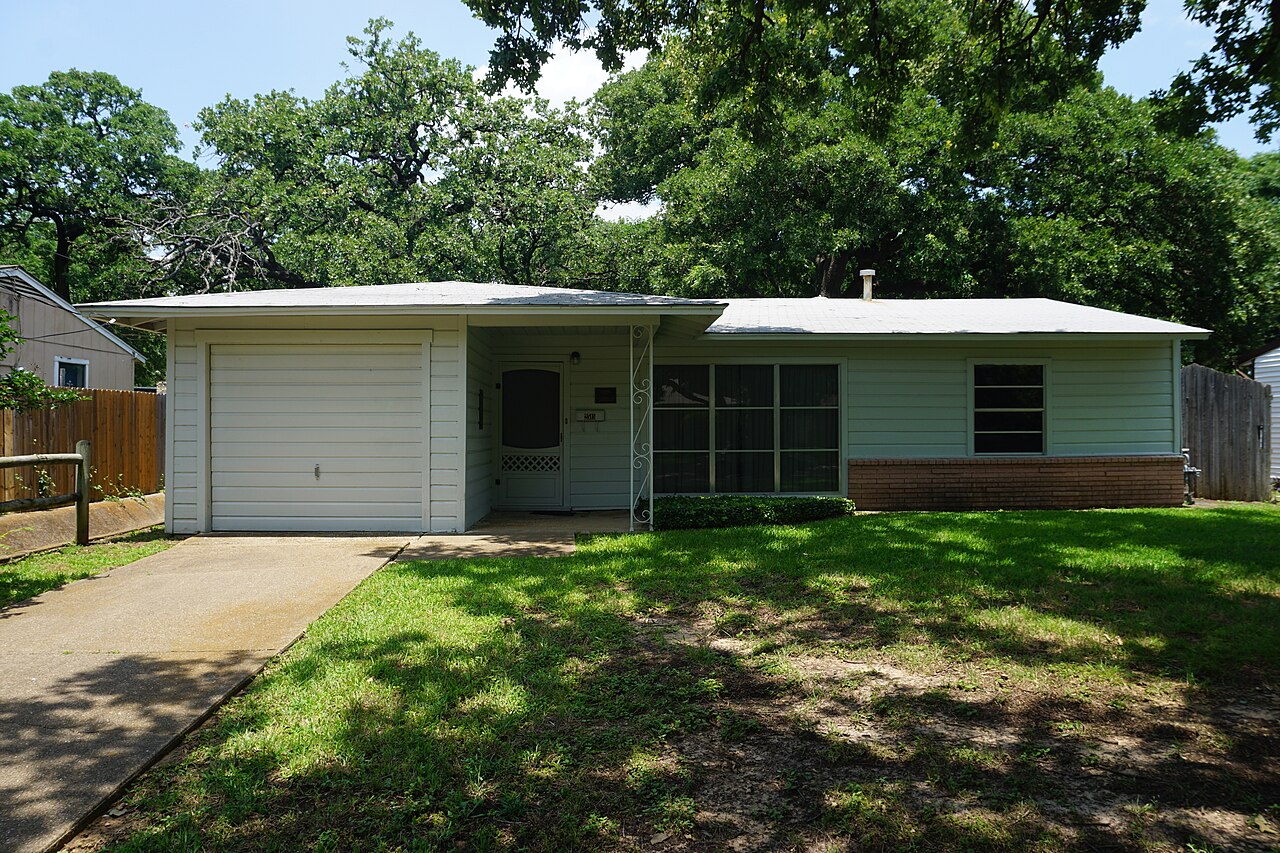
Ruth and Michael Paine occupy an important position in the documented history of Lee Harvey Oswald and Marina Oswald. Ruth befriended Marina, provided her a place to stay in Irving, Texas, and helped connect Lee to an opening at the Texas School Book Depository. Oswald’s possessions at the Paine residence later became a focus of police investigation. These facts make the Paines relevant witnesses, but do not themselves establish complicity.
The Warren Commission described Ruth Paine’s assistance to Marina and the employment referral. It concluded that Oswald’s employment was unrelated to the later-planned presidential motorcade route. Warren Commission Report, Chapter VI.
The backyard photographs and camera
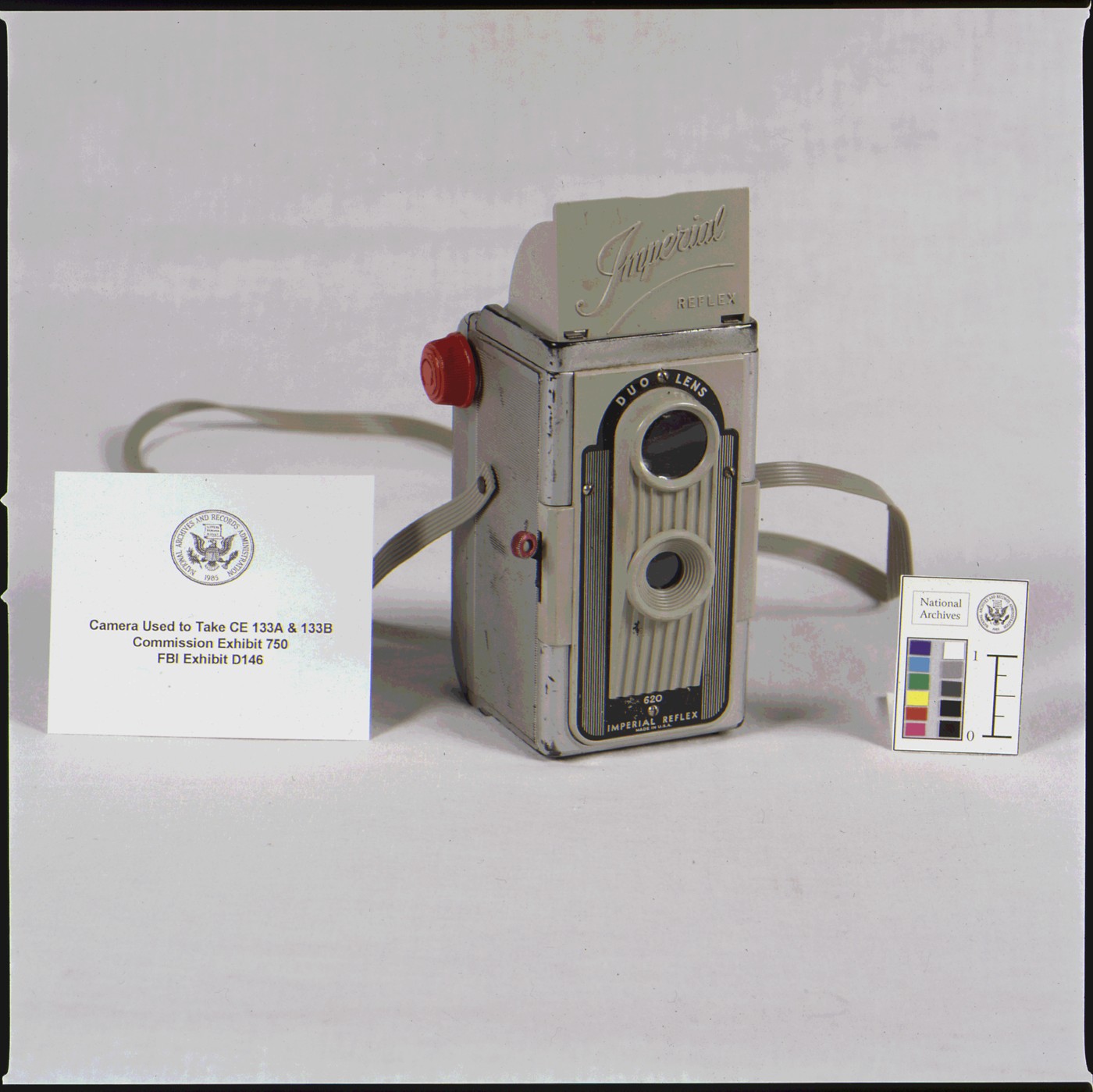
The submitted narrative challenges the discovery chronology of the backyard photographs, the provenance of a print reportedly found among George de Mohrenschildt’s effects, the location and identification of an Imperial Reflex camera, and Marina Oswald’s evolving statements. These are distinct evidentiary questions: when each print or negative was found, how the camera was recovered, what witnesses actually testified, and what photographic examinations concluded. The House Select Committee on Assassinations’ photographic panel generally supported the photographs’ authenticity; a credible challenge must address those findings rather than assume fabrication.
The HSCA photographic report separately discusses the discovery history, Marina’s accounts, and the photographic examinations. Its authentication findings should be read alongside the custody questions raised here. HSCA Hearings, Volume VI, photograph authentication.
The Paines’ associations
The submission highlights reported links among Ruth Paine’s relatives, George de Mohrenschildt, intelligence employment, and Michael Paine’s work at Bell Helicopter, as well as Mary Bancroft’s historical association with Allen Dulles. Any documented employment or personal association deserves accurate attribution and dating. However, association alone is not proof of operational coordination, foreknowledge, or participation in the assassination.
Family and CIA records: what the documents establish
Michael Paine. The Warren Commission described Michael as a Bell Helicopter research engineer with a security clearance. That employment and clearance do not establish CIA employment. More specifically, a February 28, 1978 CIA Office of Security memorandum responding to the HSCA reported that only overt-source material had been found for Michael Ralph Paine. This describes that office’s search result, rather than proving that no other relationship could have existed. Warren Report, Chapter VI; CIA memorandum, record 104-10135-10196, page 1.
Sylvia Ludlow Hyde Hoke, Ruth’s sister. HSCA file-review notes summarize a July 30, 1971 memorandum that identified Sylvia as a CIA employee in the 1961 Falls Church, Virginia directory. This is a specific documentary basis for the family-employment connection, although the review notes do not establish an assassination assignment or her complete employment history. Record 180-10145-10239, PDF page 53, internal page 11110590. This material was publicly available before the 2025 releases; it is not presented here as a newly discovered 2026 disclosure.
William Avery Hyde, Ruth’s father. A December 5, 1963 CIA memorandum states that he was considered for covert use in Vietnam in 1957, but was not used. The same memorandum describes William and Carol Hyde as earlier associates of Talbot Bielefelt, then employed in the CIA’s Foreign Documents Division. Consideration for a role and association with an employee must be distinguished from actual operational service. CIA memorandum, record 104-10120-10454.
John Lindsay Hoke, Ruth’s brother-in-law. The file-review notes identify him as an AID communications-resources specialist and list requests for security approval of liaison in 1962, 1963, and 1964. These are documented liaison-related references; they do not by themselves establish that he was a CIA employee or participated in the assassination. Record 180-10145-10239, PDF page 57, internal page 11110594.
These records substantiate particular intelligence-related family connections. The documents reviewed here do not establish that Ruth or Michael Paine directed, assisted, or had advance knowledge of the assassination. Claims concerning Michael’s mother, Mary Bancroft, and Allen Dulles require a separately sourced account of the relationship and its dates before drawing any operational inference.
Oswald’s travels and the bags
The account compares descriptions of luggage reportedly observed in New Orleans and Mexico City with bags recovered or later produced at the Paine home. Witness recollections, police inventories, and dates of recovery should be placed side by side in a documented chronology. Differences may be significant, but the original statements and chain-of-custody records must be consulted before concluding that an item was substituted or planted.
The Depository employment lead
The submission alleges that Ruth Paine pursued a Texas School Book Depository job lead while failing to relay another potentially better-paid opportunity. The underlying chronology of calls, employment referrals, and testimony warrants comparison. Even if an omission were established, an inference of deliberate placement for an assassination would require additional evidence of intent, coordination, and advance knowledge.
The Soviet Embassy letter and Mexico City
The submitted account questions Oswald’s reported Mexico City trip, a letter to the Soviet Embassy, the handling of a handwritten draft by Ruth Paine, and changes in Marina’s recollections. The central tasks are to authenticate the original correspondence, separate firsthand observations from later recollection, and test specific claims about dates, personnel transfers, and diplomatic procedures against contemporaneous records. The allegation that the letter was forged must not be treated as proven merely because a later source reports Soviet suspicions.
The reported November 22 telephone call
The account refers to an operator’s recollection of a conversation between Michael and Ruth Paine after the assassination. This claim should be assessed using the original FBI interview and any subsequent testimony, with attention to exact wording, attribution, timing, and potential discrepancies. A reported phrase suggesting shared knowledge is not by itself proof of who was responsible.
Evidentiary assessment
The Paine-related material presents a coherent set of questions about witness credibility, investigative sequence, custody of objects, and the possibility of institutional associations. The questions are appropriate for a historical inquiry, but the source text mixes documented background, disputed accounts, and uncorroborated allegations. Taken together, these questions warrant disciplined scrutiny. They do not establish that the Paines or an intelligence agency participated in an assassination conspiracy.
Conclusion: the totality of the circumstances
Viewed in the totality of the circumstances, inconsistencies should be assessed collectively only after each has been checked against primary records. The doctrine of circumstantial inference is useful as an investigative framework, not a substitute for proof. Res ipsa loquitur—“the thing speaks for itself”—captures the author’s concern that the cumulative record demands explanation, although its technical legal meaning should not be conflated with a historical finding of guilt.
Priority primary-source verification
- Warren Commission Report and Hearings: Ruth Paine, Michael Paine, Marina Oswald, George de Mohrenschildt, and employment testimony.
- House Select Committee on Assassinations, photographic evidence and relevant witness interviews.
- Dallas Police Department property inventories and FBI evidence-recovery reports concerning the Paine residence and cameras.
- FBI records concerning the reported telephone operator interview and the Soviet Embassy correspondence.
- National Archives JFK Assassination Records Collection, including relevant declassified CIA and FBI documents.
Research note: This is a standalone addition for insertion into the main treatise; no allegation in the submitted text is represented here as independently verified without examination of its underlying record.
Records and research update
Review date November 24, 2026. The National Archives release page lists an additional release on January 30, 2026, totaling 11,022 pages in 140 PDF files. It also links the additional FBI records transferred in 2025. These collections provide further material for document-level comparison. The review for this addendum did not establish a newly verified record proving that Ruth or Michael Paine participated in the assassination. National Archives release page and FBI-records update.
The City of Irving reports that Ruth Paine died on August 31, 2025. Its account describes her continuing efforts to explain her role and her testimony to the Warren Commission. Her recorded testimony and interviews remain relevant sources for assessing later claims. Irving Archives and Museum notice.
For follow-up research, the National Archives key-persons finding aid identifies files concerning Ruth and Michael Paine, including background, affiliations, and affidavits. These are research leads; each disputed assertion still requires comparison with its underlying record. National Archives key-persons finding aid.
Verification update, November 26, 2026. The National Archives finding aid identifies Ruth Paine's background (7460922), associates and relatives (7460924–7460925), affiliations (7460926), and interviews (7460927); Michael Paine's background (7460936), associates and relatives (7460937–7460940), affiliations (7460941), interviews (7460942), and testimony (7460943). Ruth's March 21 and March 23, 1964 depositions appear under 7460930–7460931, and Michael's March 17 deposition under 7460944. The folder titled “Affidavits of Ruth Hyde Paine” (7460928) is explicitly marked empty; its title does not establish an affidavit's contents. These are catalog references, not findings of intelligence employment or criminal responsibility. National Archives finding aid, boxes 49–51.
NARA's June 27, 2025 update explains that additional FBI records were transferred beginning February 20, 2025 and subsequently digitized. These records lack Record Identification Form numbers and are cataloged under National Archives Identifier 495982978. A release date establishes availability, not the truth of every assertion in a file. This source review was not an examination of every newly available document. The Irving memorial supplies biographical context and the city's perspective, rather than an independent adjudication of disputed allegations. Any proposed claim about CIA or family connections still requires the underlying document, author, date, exact relationship, and corroboration; a relative's affiliation alone does not establish another person's operational role.
Records Update: Intelligence Knowledge and Investigative Disclosure
Updated November 26, 2026. This section distinguishes recent disclosures from previously available evidence and from interpretations of that evidence.
George Joannides, the DRE, and the investigators
In written testimony submitted to Congress in May 2025, former House Select Committee on Assassinations investigator Dan Hardway discussed George Joannides's handling of the anti-Castro Directorio Revolucionario Estudiantil (DRE), whose representatives encountered Oswald in New Orleans in August 1963. Hardway also challenged Joannides's later role as CIA liaison to the committee, arguing that his earlier involvement was withheld from investigators. His testimony reproduces former chief counsel G. Robert Blakey's account of misleading answers about the DRE's CIA contact. These are serious allegations by former investigators, not a judicial determination of criminal obstruction. The underlying relationships were under discussion before 2025; renewed testimony is not itself a newly discovered operational record. Hardway written testimony, PDF pages 5 and 9–12.
July 2025 reporting described newly released Joannides records linking him to the alias Howard Gebler. This is a reported disclosure; the original memo was not independently inspected for this update. Axios, July 5, 2025.
More importantly for this essay, the task is to reconstruct what intelligence personnel knew and what investigators were told. The material reviewed here does not establish that Joannides directed Oswald, met him personally, or participated in the assassination. Knowledge, contact through an organization, concealment of a relationship, and participation in murder are different propositions requiring different evidence.
Additional FBI records and the limits of an archive
NARA's June 27, 2025 update attributes the identification of additional FBI records to a more comprehensive inventory following the opening of the FBI's Central Records Complex in 2020. Transfers began February 20, 2025, with further transfers through June. NARA reports that these records were digitized and released to the fullest extent possible, subject to restrictions such as grand-jury secrecy. The transferred series has National Archives Identifier 495982978; its records do not have RIF numbers. This expands the material available for comparison but does not, by itself, establish deliberate concealment. NARA release page, June 27 update; FBI records series.
What the 2026 access update means
On May 18, 2026, the Public Interest Declassification Board stated that records previously withheld for classification within the JFK collection had been released, while digitization of the collection continued. This is an official status statement, not a claim that every conceivable assassination-related record exists in the collection or is already online. It should also be read alongside NARA's explanation of separate legal restrictions. Public Interest Declassification Board status update; NARA, sections 10 and 11.
Assessment. These developments support further scrutiny of intelligence knowledge, investigative transparency, and the completeness of earlier disclosures. This limited review has not established new proof identifying who organized the assassination, nor new proof that Ruth or Michael Paine participated. Newly accessible information should sharpen specific questions rather than substitute for evidence of an assassination agreement.
Vietnam Policy: What the November Draft Establishes
Research clarification, November 28, 2026. Kennedy's NSAM 263 approved recommendations for withdrawing 1,000 U.S. military personnel by the end of 1963 and training Vietnamese forces to assume functions performed by Americans. The underlying McNamara–Taylor report anticipated that most U.S. personnel could leave by the end of 1965, within a program intended to sustain the war effort. This was a meaningful withdrawal initiative, but not an unconditional commitment to leave regardless of conditions. NSAM 263; McNamara–Taylor report, recommendations I.B.2–3.
Bundy's pre-assassination draft that became NSAM 273 should be distinguished from the directive issued under Johnson on November 26. The State Department's documentary history records that Bundy expected Kennedy and Ambassador Lodge to discuss the draft at a planned November 24 meeting. This context supports reading its language about completed presidential review as proposed wording for later issuance; the wording does not itself establish foreknowledge of Kennedy's death. Johnson actually met Lodge and his advisers on November 24. NSAM 273 and drafting history, footnote 1; November 24 meeting record.
The substantive comparison is more useful than speculation about the opening sentence. Paragraph 2 of the final NSAM 273 retained the withdrawal objectives of the October 2 statement. Paragraph 7 changed from planning additional South Vietnamese resources, especially maritime activity, to planning possible increased activity against North Vietnam with assessments of damage, deniability, retaliation, and international reaction, for submission to higher authority. The record therefore supports examining both policy continuity and changes in planning. This memorandum alone establishes neither an immediate cancellation of withdrawal nor an assassination motive or agreement. Final directive and draft comparison.
Lyndon Baines Johnson: Power, Policy, and the Investigation
Johnson inherited more than the presidency. He inherited responsibility for how the murder of his predecessor would be investigated. On November 29, 1963, he established the Warren Commission by Executive Order 11130. Its membership included Allen Dulles, the former CIA director Kennedy had fired. That appointment deserves scrutiny in its own right, without assuming it proves Johnson's involvement in the crime. National Archives, commission history and membership.
Johnson's recorded conversations with Senator Richard Russell reveal how personally he shaped the panel. Russell resisted serving; Johnson persisted and announced his appointment nonetheless. Clearly, this was a president actively assembling an inquiry, not merely accepting one assembled for him. That is evidence of control over its composition. It is not, standing alone, evidence that he dictated its findings. November 29 telephone conversations, recordings and transcripts.
The House Select Committee on Assassinations later found that the Secret Service's conspiracy inquiry ended prematurely when Johnson assigned primary investigative responsibility to the FBI. Centralizing responsibility may avoid duplication, but it also makes the quality and independence of the lead agency decisive. HSCA findings on investigative performance.
Vietnam policy supplies another concrete question. Johnson met Lodge and his advisers on November 24 and issued NSAM 273 on November 26. As the preceding section explains, the memorandum retained stated withdrawal objectives while changing planning language concerning North Vietnam. The documentary question is what changed, who recommended it, and how it was implemented. Political benefit, policy disagreement, and succession are reasons for inquiry; they do not themselves establish participation in murder. November 24 meeting; NSAM 273.
The accountability question. Johnson's appointments and allocation of investigative authority are documented decisions for which he can be assessed. Their significance here is the independence and reach of the inquiry he created. Assigning him responsibility for those decisions is different from proving that he arranged the assassination.
Allen Dulles: Fired by Kennedy, Appointed by Johnson
Kennedy fired Allen Dulles after the Bay of Pigs disaster. His departure was publicly ceremonial, but the ceremony should not obscure Kennedy's decision to replace the leadership associated with the failure. John McCone succeeded him in November 1961. The CIA's own historical account describes Kennedy's removal of senior leadership after the failed invasion. CIA historical study, Bay of Pigs internal inquiry; State Department history of McCone's succession.
Unbelievably, in this author's judgment, the man Kennedy had fired was then appointed by Johnson to the commission investigating Kennedy's assassination. The question is not whether a former director possessed useful expertise. It is whether someone so closely identified with an institution potentially requiring scrutiny should have helped judge the adequacy of that institution's disclosures. That is a serious concern about investigative independence, even without alleging a legally adjudicated conflict or a criminal role. Commission membership and appointment.
The concern becomes sharper when set beside the CIA's undisclosed anti-Castro operations. The HSCA concluded that the CIA–Mafia plots and AMLASH operation should have been revealed to the Warren Commission because of their possible relevance. Crucially, the committee expressly cautioned that this did not mean it had discovered a link between those operations and Kennedy's assassination. Institutional secrecy is documented; an assassination connection requires further proof. HSCA discussion of withheld operations and evidentiary limits.
Do not confuse the directors. Dulles was the former director serving on the Commission. McCone was director when Kennedy was assassinated. A credible account must distinguish what each knew, when he knew it, and what each disclosed. Neither a predecessor's actions nor an agency's omissions automatically establishes the other man's personal knowledge or intent.
The independence question. Dulles's expertise and his institutional loyalties could coexist. Appointing him did not establish a conspiracy, but it made searching examination of the CIA's disclosures particularly important. The criticism is strongest when attached to what the Commission did not learn, rather than to an assumption that former employment automatically establishes guilt.
Crime Scene Investigation: Documented Failures and Their Consequences
A presidential assassination demands disciplined control of the relevant scenes, physical evidence, and witness accounts. In my judgment, the documented access-control problems, incomplete autopsy, and absence of a complete interrogation recording demonstrate serious institutional incompetence in important parts of this response. The weaknesses were consequential: they diminished opportunities to test the account later presented to the public. This is a criticism of specified decisions and results, not a claim that every officer was incompetent or that all evidence was corrupted.
The assessment must follow the evidence from Dealey Plaza and the Depository through Parkland, the limousine, and the autopsy, asking who controlled access, collected information, authorized movement, and documented transfers. An allegation about a particular item still requires its own record. The cumulative criticism is strongest where several independently documented failures reduced different safeguards; it does not depend on inventing a complete absence of investigation.
Dealey Plaza: searching an area is not the same as accounting for its evidence
The first task was rescue and the immediate pursuit of a possible gunman. The next was to preserve the scene so that later conclusions could be tested. Those are different responsibilities. A controlled perimeter, identified search areas, photographs of objects in place, recovery records, and a traceable custody history are the safeguards against a scene becoming impossible to reconstruct. These are the criteria by which this author assesses the response; they are not a claim that every modern procedure was formally required in Dallas in 1963.
It would be demonstrably wrong to say no one searched the grassy-knoll or railroad-yard area. Deputy constable Seymour Weitzman testified that he entered the railroad yards, observed footprints going in different directions, and encountered other officers. The Warren Report also recounts the movements of officers and bystanders toward that area. Plainly, people were looking. Those accounts, however, do not by themselves establish a methodical, comprehensively documented forensic sweep or prove the area was free of potentially relevant evidence. Weitzman testimony, printed pages 106–107; Warren Report, Chapter III.
The question about closing the plaza must therefore be precise: when was access restricted, by whom, over what area, and what search and recovery documentation survives? The sources reviewed for this section do not establish that the entire plaza was never closed, nor do they establish a complete perimeter-and-search chronology. I will not turn that gap in this review into a proved historical omission. But the distinction is consequential: an unsuccessful search justifies confidence only to the extent that its coverage and methods can be reconstructed. A failure to find a cartridge case is not automatically proof that none was there.
The limousine: a moving crime scene
The limousine was both emergency transport and a surface bearing physical evidence. Racing Kennedy and Connally to Parkland was plainly necessary. The serious evidentiary question begins after that emergency: who controlled access, what was documented before the car was moved again, and how were recovered items tracked?
The car was flown to Washington, and it was examined there. The Warren Report records the recovery of bullet fragments and lead particles; FBI examiner Robert Frazier described the transfer of the larger fragments to the laboratory on the night of November 22. Accordingly, the claim that the limousine simply left and was never searched is untenable. Its removal from Dallas is not, by itself, proof of evidence destruction. Warren Report, the presidential automobile; Frazier testimony, Warren hearings, Volume V.
Nevertheless, finding fragments does not answer every preservation question. The car's condition before each intervention, its movement, access by personnel, and the relationship between photographs and recovered material all warrant a documented chronology. In my judgment, a presidential vehicle bearing blood, tissue, and ballistic damage demanded exceptionally rigorous control. Any particular claim of cleaning before examination, disappearance of material, or deliberate alteration must be established separately rather than inferred from the car's departure.
Jurisdiction: a federal office did not erase a Texas homicide
The Warren Commission acknowledged that presidential murder was not itself a federal offense in 1963. It distinguished Texas murder jurisdiction from possible federal conspiracy jurisdiction. That legal gap helps explain the confusion over investigative responsibility; it does not mean the evidence ceased to require protection once federal personnel became involved. Warren Report, Chapter VIII, recommendation for a federal assassination statute.
Once Kennedy was pronounced dead, rescue of the President gave way to the responsibility to account for his remains as homicide evidence. The relevant hospital spaces, objects, clothing, and vehicle required protection to the extent necessary for examination and recovery. This author argues for controlled, documented handling—not an unverified legal requirement to close the whole hospital or keep Dealey Plaza sealed for months or years. Preserving evidence and preserving an entire location indefinitely are different propositions.
The body: presidential status did not erase the forensic responsibility
Another troubling curiosity. Local demands for an autopsy were bypassed, yet the examination eventually performed was later found incomplete under medicolegal standards. The relevant connection is the lost opportunity for a sufficiently complete examination; the sequence does not itself establish that the inadequacy was intended.
The conflict over the body is recorded in an agent's own testimony. Roy Kellerman recounted being told that a homicide required a local autopsy and responding, “No, we are not.” He described another official's objection and his insistence on removal. The body then went to Washington for examination at Bethesda. This was a decision to bypass the local examination being demanded, not an absence of awareness that an autopsy was at issue. Kellerman testimony, discussion of removal from Parkland.
The strongest criticism is what the later official inquiry found about the examination actually performed. The HSCA concluded that the autopsy was incomplete under established medicolegal standards despite authority to conduct a complete one. It identified failures to consult the treating Parkland doctors before beginning, obtain appropriate full-time forensic expertise, dissect the back-to-neck wound track, and adequately examine and section the brain. The committee attributed the shortcomings to several contributing circumstances rather than a single source. These are specific official findings of deficient performance, not merely this author's suspicion. HSCA Hearings, Volume VII, performance of the autopsy, paragraphs 95–97.
In my judgment, these failures represent a grave failure of forensic responsibility. Shock, rank, family grief, and urgency help explain the circumstances; they do not restore an examination that was never completed to the required standard. Calling this an institutional dereliction is my assessment of the failures described—not a finding that a named official committed a crime or intentionally falsified the autopsy.
James Files and the cartridge case: the difference between a lead and evidence
The claimant discussed earlier in this essay is James Files. Producer Bob Vernon told the Assassination Records Review Board in 1994 that Files claimed to have bitten a spent .222 cartridge case and left it on the fence. Vernon also described a casing reportedly found buried near the fence in 1987 and an examiner's opinion that its dents were tooth marks. This records what Vernon presented; it is not a Review Board finding authenticating Files's account. Vernon statement, November 18, 1994.
Even an authentic tooth mark would not establish who made it, when the case was fired, or when it reached that ground. There is no demonstrated custody history connecting this reported 1987 discovery to the assassination twenty-four years earlier. It cannot substantiate a claim that officers missed an assassination cartridge in 1963. Conversely, the inability to authenticate that object does not excuse any independently established failure to preserve the original scene. The two questions must be kept separate.
Access control: the original report records a serious gap
A curiosity that can be tested. Accounts of sealing the building must be compared with an agent's reported ability to enter it unchallenged. Here the question is operational: did the restrictions actually work?
The failure to secure access is not merely an inference from missing paperwork. The Warren Report places Inspector Sawyer's orders to guard the Depository's front and rear doors no earlier than 12:37 p.m., and possibly later. More troublingly, it records that Secret Service agent Forrest Sorrels returned roughly twenty minutes after the shooting, found no officer at the rear door, and entered without identifying himself. Other testimony described earlier efforts to guard the building. These differing accounts must be retained, but the reported rear-door entry is a specific reason to question the effectiveness of the restrictions. Warren Report, Chapter IV, printed pages 155–156.
In my judgment, such uncertainty about access to a suspected firing location is a serious failure of scene control. A command to seal a building is not equivalent to a demonstrated, continuously enforced seal. This finding concerns the Depository; it does not establish that every part of Dealey Plaza was uncontrolled or that an unidentified accomplice used that entrance.
Command and witnesses: responsibility must be reconstructed
Sawyer testified that he established a command post and arranged for officers and deputies to escort witnesses to the sheriff's office for affidavits. He estimated that twenty-five to fifty people offered information during his time there. There was therefore command activity and witness gathering. The questions are its coverage, timing, documentation, and follow-through—not whether officers did absolutely nothing. Sawyer testimony, printed page 320.
The Warren Commission separately criticized insufficiently defined responsibilities between Secret Service personnel and assisting local officers in the protective arrangements. That finding concerns protection before and during the attack; it must not be silently converted into proof that no post-shooting command existed. The post-shooting inquiry must identify who directed each search, authorized each transfer, collected each statement, and accepted each item of evidence. Warren Report, conclusions on protective coordination.
For witnesses, thoroughness requires more than a final list of names. The earliest account, its recording time, the questioner's identity, the witness's opportunity to observe, and later changes must be compared. A later discrepancy can reflect memory, questioning, or error; it does not automatically prove disinformation. Equally, later recollections cannot silently substitute for an original statement. The surviving interviews and affidavits must be tested witness by witness.
What is established, and what still needs an item-by-item audit
| Issue | Documented basis or present limit | Investigative consequence |
|---|---|---|
| Access restrictions | The Warren Report describes delayed sealing orders and Sorrels's later unchallenged rear entry. | A concrete basis to question effective control of the Depository. |
| Scene searches | Officers described searches. This review has not reconstructed a complete search-area and recovery chronology. | Completeness remains to be demonstrated; the missing chronology in this review is not proof no search occurred. |
| Command and witnesses | Sawyer described a command post and arrangements for affidavits. | Coverage and follow-through require comparison with individual statements, dispatch records, and assignments. |
| Evidence custody | Some transfers are recorded, including limousine fragments. This is not a completed audit of every exhibit. | Any alleged break must name the item, interval, responsible custodians, and conflicting or absent record. |
| Medical examination | The HSCA identified specific departures from a complete medicolegal autopsy, discussed above. | Documented deficiencies constrain later reconstruction; they do not prove every medical finding false. |
| Suspect questioning | No complete stenographic or audio record of Oswald's interrogation survives in the official account. | Later summaries cannot reproduce an exact, independently reviewable exchange. |
The inference I draw. The documented access failure and forensic shortcomings justify a forceful challenge to the quality of the response. In my judgment, the inquiry did not achieve the completeness and independent testability that this homicide demanded. That criticism becomes stronger when it identifies a specific lost opportunity; it becomes weaker when it labels every uncertainty tampering or treats every missing record in this review as evidence destroyed by officials. Chain of command concerns responsibility; chain of custody concerns the handling of a particular item. Both must be investigated, and neither can be inferred wholesale from the other.
Dallas: an incomplete interrogation record and failed custody
Remarkably, approximately twelve hours of Oswald's interrogation produced no stenographic transcript or tape recording. Investigators' subsequent memoranda preserve accounts of the questioning, but they cannot supply a complete recording of questions, answers, sequence, and context. This is a demonstrable limit on what can now be reconstructed, not proof that every reported answer was fabricated. Warren Report, Appendix XI.
The Warren Commission itself criticized the disorder surrounding Oswald's detention, official disclosures to the press, and the failure to protect him. Ruby's killing of Oswald eliminated the possibility of a trial at which the prosecution's evidence and the accused's account could have been tested. The investigative consequence was profound, regardless of whether the security failure arose from negligence or something more. The failure alone does not establish a coordinated silencing operation. Warren Report, Chapter V.
Texas: a supplemental inquiry, not an absent one
It would be inaccurate to say Texas conducted no investigation. Attorney General Waggoner Carr issued a twenty-page supplemental report on October 5, 1964, supported by approximately 3,000 pages of documents. The Texas State Library explains that it was intended to supplement, rather than replace, the Warren Commission's report; Carr and counsel Leon Jaworski endorsed its lone-assassin conclusion. The proper question is how much independent testing this arrangement supplied, not whether state work existed at all. Texas State Library, supplemental report and supporting records.
Medical evidence: a missed opportunity for independent review
The HSCA criticized the Warren Commission's failure to use the autopsy photographs and X-rays to obtain an independent medical assessment. Privacy concerns did not remove the importance of checking testimony against the underlying images. Yet the later review also matters: the HSCA authenticated the materials and its pathology panel concluded that two bullets struck Kennedy from behind, with dissent noted in its findings. A criticism of the original review must confront that subsequent evidence rather than omit it. HSCA medical evidence findings.
Federal agencies: an inadequate conspiracy inquiry
The HSCA distinguished the FBI's thorough investigation of Oswald from its inadequate pursuit of conspiracy in important areas, including organized crime and Cuban connections. It also criticized incomplete information sharing by the FBI and CIA. Those findings support a forceful argument that important questions were not adequately tested. They do not justify calling all federal forensic work worthless. HSCA findings on agency performance.
The cumulative consequence. An unrecorded interrogation, a murdered suspect, limited independent review, and deficient follow-up can leave major uncertainties even where substantial evidence survives. In my judgment, the documented failures amount to an institutional failure of investigative responsibility. Their cumulative consequence was to narrow the ability to resolve disputed questions. Whether a particular failure was deliberate—and whether it helped conceal an assassination agreement—must be established through evidence specific to that act.
The Cabell family connection
Dallas Mayor Earle Cabell was the brother of General Charles P. Cabell, the former deputy director of Central Intelligence. Charles's tenure ended on January 31, 1962, before the assassination. The relationship is documented, not merely an insinuation based on a shared surname. It places a close family connection to former senior CIA leadership within Dallas's civic leadership. It does not establish that either brother planned the assassination, controlled evidence, or improperly changed the motorcade route. Texas State Historical Association biography; State Department historical persons reference.
In my assessment, this family connection is another stone in the walkway of circumstances that warrants scrutiny of powerful relationships and potentially divided loyalties. Alongside the other circumstances examined here, it contributes to my suspicion of possible collusion and conflicts of interest. That is my inference, not a documented finding against either Cabell. Its weight depends on evidence of what the brothers actually communicated or did concerning the visit and investigation; kinship alone establishes neither a criminal agreement nor an improper official decision.
Working relationships and independent accountability
Dallas Police Chief Jesse Curry and other senior Dallas officers worked directly with Secret Service agents Forrest Sorrels and Winston Lawson on preparations for the presidential visit. Lawson's statement identifies those meetings and the coordination of local arrangements. These documented official relationships do not establish that Curry was a CIA operative, that the participants shared a secret purpose, or that ordinary cooperation was itself improper. Lawson statement, Commission Exhibit 769.
The accountability concern is institutional. Agencies supplying the account of the assassination also had their own protective and investigative performance to explain. Their accounts therefore required independent testing against original records, physical evidence, and outside testimony. The Warren Commission itself identified insufficiently defined protective responsibilities between the Secret Service and local authorities. That finding supports criticism of the arrangements; it is not a finding that a personal conflict of interest or a conspiracy existed. Warren Commission findings.
Back to the Classroom: The Totality of the Circumstances
I was a boy when the loudspeaker crackled in that Dorchester classroom. Sixty-three years later, the question still follows me: what explanation best accounts for the record as a whole? My answer rests on a cumulative circumstantial argument. It does not rest on a newly authenticated order to kill Kennedy, a proved agreement among named conspirators, or a complete reconstruction of the crime scene.
What the circumstances establish—and what I infer
First, the CIA–Mafia partnership establishes that intelligence officers and organized-crime figures had worked together on deniable assassination operations. That is documented capability and association. It does not establish that the same partnership killed Kennedy. Second, the conflicts described here supply possible motives for particular actors. Motive helps explain a hypothesis; it does not identify a perpetrator. Third, Oswald's encounters with the CIA-funded DRE and Ruby's organized-crime associations make their surrounding networks relevant. Association must still be connected to a specific act, instruction, or agreement.
Fourth, the failures of disclosure are independently consequential. The Commission did not receive a full account of the Castro plots. Later investigators challenged the CIA's handling of Joannides and its answers about his role. Unbelievably, in my judgment, Johnson placed the director Kennedy had fired on the panel investigating Kennedy's death. These circumstances raise serious questions about independence and completeness, even if none, considered alone, proves participation in the shooting.
Finally, the investigation lost opportunities it could never recover. Oswald died without trial. His interrogation was not fully recorded. Later examinations criticized important investigative choices. These failures limited the ability to test competing accounts. They are not affirmative proof of whichever account one prefers. The same discipline applies to the Paine family connections, the disputed Meyer diary, and the deaths of potential witnesses: unresolved questions remain questions until the underlying evidence supports an answer.
Why I believe the pattern matters
I do not find it persuasive to examine each established circumstance in isolation and then dismiss the whole because no single item supplies every missing link. The relevant question is whether independently supported circumstances reinforce one another and make an explanation more convincing. Equally, several repetitions of one allegation are not several independent pieces of evidence. A weak premise does not become strong simply because it appears in a long list.
My judgment is that the convergence of deniable killing operations, overlapping intelligence and criminal networks, potential grievances, and consequential failures of disclosure makes an organized plot involving individuals from those circles a serious and, to me, persuasive explanation. That is the conclusion toward which I believe the totality points. I cannot identify a proved chain of command, assign criminal responsibility to Johnson or Dulles, or establish that the CIA as an institution ordered Kennedy's murder. Those are materially different claims.
The strongest competing explanation must also be faced honestly: Oswald could have acted alone while agencies subsequently concealed embarrassing operations, intelligence failures, and misconduct unrelated to planning the assassination. The physical evidence and later forensic findings discussed in “The Case for the Defense” cannot simply be wished away. My cumulative argument is persuasive only to the extent that it explains the established record better than that alternative. Secrecy by itself cannot decide the issue.
Where the cumulative argument is strongest
Curiosities become significant when their consequences connect. I use the term for a documented circumstance that requires explanation, not as a substitute for evidence. An error, a disputed recollection, and a deliberate withholding are different things. They must not be counted as interchangeable confirmations of a single plot.
The strongest established conclusion concerns the investigation itself. The incomplete medicolegal autopsy, the absence of a full interrogation recording, the loss of the accused before trial, and later findings of inadequate conspiracy inquiry did not all have the same cause. Nevertheless, each reduced a different means of testing the account. Their effects accumulate even without proof that they were coordinated.
That is the point at which my criticism becomes most forceful: the public was asked to accept conclusions whose completeness depended on investigative opportunities already lost and institutional information not fully supplied. A recovered bullet fragment cannot answer an unasked intelligence question. An intelligence omission cannot erase a laboratory result. Both belong in the accounting, and neither should be used to conceal the limitations of the other.
From that documented inadequacy I draw a further, expressly personal inference: the surrounding intelligence and criminal relationships make an organized plot more persuasive to me than an account treating every troubling circumstance as unrelated. The reader must still decide whether those connections are strong enough to outweigh the competing explanation of a lone assassin followed by separate negligence and institutional concealment. My conviction is not a substitute for that comparison.
My inference of a cover-up. The recurring curiosities matter to me because several converge on the same consequence: relevant information was unavailable to investigators, or an opportunity to test the account was lost. I believe the documented withholding and misleading disclosures support an inference that parts of the institutional response sought to conceal information. The further proposition—that this concealment was coordinated to protect the planners of Kennedy's murder—remains my interpretation, not an established finding. Incompetence, self-protection, and deliberate concealment may coexist; the evidence must determine which description fits each act.
The conclusion I ask the reader to weigh
Circumstantial evidence is evidence. It can be substantial and compelling; it is not inherently the opposite of “hard evidence.” But a cumulative historical inference still depends on reliable premises, meaningful connections, and serious consideration of alternative explanations. “The totality of the circumstances” describes how I ask the reader to assess this record. It is not a shortcut around the missing links, nor a claim that a courtroom burden of proof has been met.
I believe Kennedy's assassination was planned. I believe the documented intersection of intelligence operations and organized crime deserves a more searching explanation than the original inquiry supplied. Most firmly of all, I conclude that the public was entitled to a more complete, independent accounting. The record supports that demand even where it does not settle the identity of the planners.
For me, the circumstances converge. For the reader, the obligation is to test that convergence: distinguish what is documented, what is corroborated, what is disputed, and what remains my judgment. I ask for scrutiny of the whole record, not acceptance on faith.
Eleven days before Dallas, Kennedy attended Veterans Day ceremonies at Arlington with his young son. In this photograph, the boy approaches with his hands tucked behind his back, and his father smiles. On November 25, the child's third birthday, Kennedy was buried at Arlington. The image's emotional force belongs here as remembrance, not evidence of a conspiracy.
A family farewell
On November 25, 1963, John F. Kennedy Jr. saluted his father's coffin outside St. Matthew's Cathedral. It was his third birthday. Jacqueline stood with the children as the nation mourned its President. This contemporary account records a family's loss within the public ceremony: UPI, November 25, 1963. Remembrance explains the human stakes of this inquiry; it cannot establish who planned the murder.
The words he never delivered
The address prepared for the Texas Democratic State Committee in Austin on the evening of November 22 ended with an appeal to shared purpose:
“Let us stand together with renewed confidence in our cause—united in our heritage of the past and our hopes for the future—and determined that this land we love shall lead all mankind into new frontiers of peace and abundance.”
These were prepared words, never delivered—not a recording of Kennedy's last remarks and not the Dallas Trade Mart address. The intended Austin occasion is identified in the Congressional Record, June 1, 1964, printed page 12370; prepared address transcript.
For those who admired him, the loss was not only a life abruptly ended but a future suddenly left unfinished. The promise in those words cannot answer the forensic questions. It explains why those questions still matter to me. Remembering Kennedy should deepen our insistence on truth, not lessen the care with which we distinguish evidence from belief.
Behind every memorandum in this essay was a human life. Behind this one was also a child who would have to grow up without his father. That loss is why I keep asking the questions—and why the answers must be worthy of the facts.
The cumulative consequences of an incomplete inquiry
The force of the argument lies in the relationship between failures, not merely their number. Scene control concerns what could be collected before it disappeared or was disturbed. Custody records concern whether a later exhibit can be reliably traced to its recovery. Medical examination concerns what the wounds can establish. Intelligence disclosure concerns whether investigators knew enough to ask the right questions. A weakness in one area cannot automatically invalidate another, but weaknesses across these different areas can leave an inquiry unable to resolve the very connections it was created to examine.
That is why I regard the recurring curiosities as consequential. A poorly controlled entrance is a security failure. An incomplete autopsy is a medical and investigative limitation. Withholding a relevant covert operation is a disclosure failure. None becomes evidence of murder merely through proximity to the others. Together, however, their documented consequences challenge the confidence with which an exhaustive explanation could be presented. The public was owed more than confidence; it was owed a record open to meaningful challenge.
The distinction between institutional concealment and an assassination cover-up is decisive. Officials might conceal their own failures without knowing anything about a murder plot. Evidence that would strengthen the larger allegation must connect the concealment to knowledge of the planners, assistance to them, or a common direction. That connection remains the central question. My inference of an organized plot is forceful, but it must remain answerable to that test.
I therefore ask the reader to hold two judgments separately: how persuasive is the case against Oswald, and how complete was the investigation of possible assistance? A persuasive answer to the first cannot substitute for investigation of the second. Nor can defects in the second erase evidence bearing on the first. The totality must include both, or it is not the totality at all.
My final judgment
A President was murdered. The accused was killed before trial. His interrogation was not fully recorded. The autopsy was incomplete by the standards identified in the later House investigation. Crucial information about covert operations was withheld from the original inquiry. These are not interchangeable failures, and they do not prove a single directing hand. But their consequences converge: the public lost opportunities to test the explanation it was asked to accept.
To call each circumstance a curiosity and then dismiss the accumulated record would, in my judgment, be a profound mistake. The troubling pattern is not merely that officials made errors. It is that errors diminished the evidence available for scrutiny while institutional secrecy restricted what investigators could learn. Evidence against Oswald deserves examination; so does the conduct of the institutions that supplied, interpreted, and withheld information. Neither inquiry cancels the other.
My conclusion is that the documented failures and withholding support a serious inference of institutional concealment, and that the surrounding intelligence and criminal relationships make an organized assassination plot persuasive to me. I cannot supply a proved chain of command, and I will not disguise that missing proof. But neither will I treat an incomplete investigation as a complete answer. The stronger claim—that the concealment protected the planners of a coup d'état—remains a hypothesis requiring evidence of political direction and purpose.
The assassination killed the President. The failures that followed damaged the public's ability to establish the whole truth. Sixty-three years later, that distinction is not an excuse to close the file. It is the reason to keep it open.
About This Essay
Research method. This essay draws on contemporaneous records, sworn testimony, congressional and executive-branch investigations, and agency files released under the President John F. Kennedy Assassination Records Collection Act. It distinguishes documented facts, official findings, allegations, and the author's own judgment, and identifies each where it matters. Agency records establish what an agency recorded or received; assertions within them can require separate corroboration.
AI assistance. Generative AI assisted with locating sources, drafting and editing passages, organizing citations, and formatting this revision. The cover and the original figures identified as AI-generated are illustrations, not historical records. Additional user-supplied depictions are expressly labeled unverified illustrations where their provenance is not established. Emotional imagery supplies no corroboration of an allegation; captions distinguish it from historical photographs. The source notes identify the historical and institutional records relied on for factual claims.
Copyright. © 2026 Stephen Partello. All rights reserved in qualifying human authorship. The notice applies only to qualifying human-authored expression. Historical facts, public-domain material, third-party works including photographs credited to others, and AI-generated expression are outside this claim.
Source Notes
[1] CIA Office of Security memorandum, "The Johnny Roselli Matter," in CIA record 104-10122-10141, PDF pp. 8–9, National Archives JFK Assassination Records Collection. 104-10122-10141
[2] CIA, Office of Security memoranda on John Roselli, including the account of the September 14, 1960 approach at the Hilton Plaza Hotel and the instruction that the U.S. Government "should not become aware of this operation"; CIA summary memorandum, RIF 104-10106-10050, stating that Roselli was used "in support of operations designed to assassinate Fidel Castro" from September 1960 through February 1963. CIA memorandum · RIF 104-10106-10050
[3] Senate Select Committee to Study Governmental Operations with Respect to Intelligence Activities (Church Committee), Alleged Assassination Plots Involving Foreign Leaders, Interim Report (1975), sections on Cuba and the CIA–organized crime plots. Interim Report
[4] CIA "Family Jewels" documents released June 26, 2007, as reported by NBC News, "CIA acknowledges Castro plot went to the top." NBC News
[5] White House telephone logs and FBI records on Judith Campbell, compiled in Church Committee records, RIF 157-10002-10027; FBI memorandum of March 20, 1962; "J.F.K. and the Mobsters' Moll," Time, December 29, 1975 (Hoover luncheon of March 22, 1962); Assassination Records Review Board, Final Report (1998), on the Exner files. White House logs · Time · ARRB Final Report
[6] CIA notice of the appointment of Richard Helms as Deputy Director (Plans) succeeding Richard Bissell, February 14, 1962, CIA-RDP85B00803R000100150066-6; Foreign Relations of the United States, 1961–1963, vol. X, list of persons. CIA notice · FRUS vol. X
[7] Marcello v. Kennedy, 194 F. Supp. 748 (D.D.C. 1961), and 194 F. Supp. 750 (D.D.C. 1961), recording Marcello's arrest and summary deportation to Guatemala on April 4, 1961. 194 F. Supp. 748
[8] House Select Committee on Assassinations (HSCA), Report (1979), part I.C, on organized crime, Marcello, Trafficante, Hoffa, and Jack Ruby; HSCA Appendix, vol. IX, section III (Marcello) and section V (Ruby's associations); contemporary report of the HSCA findings and the Aleman account, July 1979. HSCA Report I.C · HSCA vol. IX, Marcello · HSCA vol. IX contents
[9] Foreign Relations of the United States, 1961–1963, vol. IV, NSAM 263 (October 11, 1963) and NSAM 273 (November 26, 1963); vol. XI on the Attwood contacts with Cuba. NSAM 263 · FRUS vol. XI
[10] G. Robert Blakey's remarks on the release of the HSCA report, July 1979, as widely reported; see Dan E. Moldea, "On Hoffa, Marcello, Trafficante, and the Murder of President John Kennedy." Moldea
[11] CIA, George Joannides background memorandum, RIF 104-10337-10008; CIA personnel file of George Joannides, released July 3, 2025, including the memorandum of January 17, 1963 arranging an alias driver's license in the name "Howard Mark Gebler"; Axios, July 5, 2025; Tom Jackman, The Washington Post, July 14, 2025 (the DRE's contacts with "Howard," the radio-debate tape, and J. Barry Harrelson's statement). The Post later appended corrections to its article; the passages relied on here should be checked against the corrected version. RIF 104-10337-10008 · Joannides file · Axios · Washington Post
[12] CIA, Mexico City Station History, RIF 104-10414-10124, released in full in 2025; Associated Press, March 19, 2025, quoting historian Philip Shenon on the CIA's surveillance of Oswald in Mexico City. NARA 2025 release · AP report
[13] Warren Commission, Report (1964), chapter 6, on Oswald's employment at the Texas School Book Depository and the FBI's knowledge of his whereabouts. Chapter 6
[14] Warren Commission, Report (1964), chapter 1 (summary): route approved November 18 and publicized November 19; speed of about 11 miles per hour on Elm Street; the Tippit shooting and Oswald's arrest. Commission Exhibits 1362 and 1363 reproduce the November 19 newspapers. Chapter 1
[15] Warren Commission, Report (1964), chapter 2, printed pp. 31–40 and 48–51, on the Dallas visit, the Stevenson incident, the motorcade route, and the absence of systematic building inspections; Appendix 12 on the route. Chapter 2 · Appendix 12
[16] HSCA, Summary of Findings (1979), findings I.B–D; National Research Council, Report of the Committee on Ballistic Acoustics (1982). HSCA Summary · NRC report
[17] Dallas Municipal Archives, JFK Collection, including the 1992 public release of arrest records for Harold Doyle, John Forrester Gedney, and Gus Abrams. Dallas Municipal Archives
[18] Warren Commission, Report, chapter 3; HSCA, Report, part I.A (medical and firearms evidence); National Archives, "An Abrupt Transition," Prologue (2000), on the removal of the body from Parkland; Assassination Records Review Board, Final Report (1998), chapters on the medical evidence and missing autopsy materials; Sixth Floor Museum catalog photograph of the limousine being covered at Parkland. WC chapter 3 · HSCA I.A · Prologue · ARRB Final Report
[19] Texas State Historical Association, Handbook of Texas, "Ruby, Jack"; Warren Commission, Report, chapter 6, on Ruby; HSCA, Report, part I.C and Appendix vol. IX, section V. Handbook of Texas
[20] "Ruby Introduced Oswald as C.I.A. Agent, Woman Tells House Inquiry," Associated Press in The New York Times, April 1, 1977, from the CIA's file copy, National Archives record 104-10095-10084. The article reports an allegation made to House investigators; it is not a finding. 104-10095-10084
[21] Foreign Relations of the United States, 1964–1968, vol. XXXII, document 315, Editorial Note, summarizing the CIA Inspector General's 1967 report on the AMLASH operation; Church Committee, Final Report, Book V, The Investigation of the Assassination of President John F. Kennedy: Performance of the Intelligence Agencies (1976). FRUS Editorial Note · Church Book V
[22] CIA Inspector General, Report on Plots to Assassinate Fidel Castro (1967), contents pages for Project AMLASH, CIA record 104-10213-10101, PDF p. 7, National Archives. 104-10213-10101
[23] Church Committee, Final Report, Book V (1976), findings on the intelligence agencies' support of the Warren Commission; Assassination Records Review Board staff summary of the Church Committee record on Richard Helms and the AMLASH operation. Church Book V · ARRB summary
[24] The JFK Files: Assessing Over 60 Years of the Federal Government's Obstruction, Obfuscation, and Deception, hearing before the House Task Force on the Declassification of Federal Secrets, May 20, 2025, Serial No. 119-27, pp. 11–12 (Hardway) and p. 32 (Tunheim); Dan Hardway, written testimony, May 20, 2025. Hearing transcript · Hardway testimony
[25] CIA memorandum for the Special Agent in Charge, District Field Office, January 17, 1963, subject "JOANNIDES, George E.," requesting an alias backstopped District of Columbia driver's permit in the name "Howard Mark GEBLER"; CIA document C07172801, approved for release May 27, 2025. C07172801
[26] National Archives, JFK Assassination Records: 2025 Documents Release, including the January 30, 2026 additions; National Archives Identifier 495982978 (FBI records transferred in 2025); Associated Press, "FBI says it found 2,400 new JFK assassination records," February 11, 2025. NARA 2025 release · NAID 495982978 · AP report
[27] James E. Erdman III, written testimony, hearing on "Whistleblower Testimony on the COVID Coverup," Senate Homeland Security and Governmental Affairs Committee, May 13, 2026, enclosed with the Committee's letter to CIA Director John Ratcliffe of May 14, 2026, PDF p. 15; Michael Evans, ed., "MKUltra: Declassification Task Force Should Focus on Real Secrets, Not Conspiracy Theories," National Security Archive Briefing Book No. 924, June 29, 2026; Washington Times, May 15, 2026; Assassination Archives and Research Center report on the hearing and the CIA's response. Erdman testimony · National Security Archive · Washington Times · AARC
[28] Assassination Records Review Board, Final Report (1998), p. 54, comparison of a CIA record as released by the CIA in 1992 and after Review Board action in 1995, reproduced in record 104-10337-10014, PDF p. 45. 104-10337-10014
[29] "'Mafia Spies': Sam Giancana is gunned down before he can be called before Senate," Chicago Sun-Times, April 6, 2019 (including William Safire's 1975 observation); Michigan Daily, June 21, 1975 (Senator Church's comments); The Mob Museum, "Chicago Outfit boss Sam Giancana killed 50 years ago" (2025). Sun-Times · Michigan Daily · Mob Museum
[30] "Deep Six for Johnny," Time, August 23, 1976; Associated Press, "Crime Figure, Linked to Plot on Castro, Found Slain," The New York Times, August 8, 1976; New York Times report on Roselli's death and his Senate testimony, preserved in the CIA reading room. Time · CIA reading room
[31] Robert G. Vernon, submission to the Assassination Records Review Board on the James E. Files interview (1994), including the account of the bitten cartridge case and the reported 1987 find of a .222 casing; United Press International report on the FBI's assessment of Files's claim, preserved in Review Board records; Files's 1994 statement as excerpted by Spartacus Educational. Files's account is uncorroborated and is cited as the source of his claims only. Vernon submission · Files statement excerpt
[32] Press report of Charles Nicoletti's murder in Northlake, Illinois, March 29, 1977, preserved in the CIA reading room (CIA-RDP88-01315R000300510020-4); The Mob Museum and contemporary press on Nicoletti's role under Sam Giancana. 1977 press report
[33] HSCA, Report, section examining George de Mohrenschildt and his contacts with CIA employee J. Walton Moore; CIA memorandum, NARA document 32357018, PDF p. 5. NARA document
[34] Contemporary and later press material preserved in federal files, NARA docid-32245514 (Kilgallen) and record 104-10400-10010; HSCA, Report, part I.C. Accounts of Florence Pritchett Smith's role are later accounts and are cited as the source of the allegation. NARA record · Press clippings
[35] Senator Frank Church, remarks of July 18, 1975, as recorded in later scholarship on the Church Committee; Senator Richard Schweiker's dispute of the "rogue elephant" view on CBS's Face the Nation, July 20, 1975, as chronicled in The New York Review of Books. Scholarly account · NYRB chronicle
[36] Project MKULTRA, the CIA's Program of Research in Behavioral Modification, joint hearing before the Senate Select Committee on Intelligence and the Subcommittee on Health and Scientific Research, August 3, 1977, printed p. 3 (opening statement of Senator Edward M. Kennedy: records destroyed in January 1973 at the instruction of Director Richard Helms; surviving documents located in 1977). Hearing record
[37] United Press International, "CIA destroyed 92 interrogation videotapes," March 3, 2009; Department of Justice statement of November 9, 2010 that Special Prosecutor John Durham would not bring charges; reporting on the White House lawyers' objections. UPI · Durham decision
[38] PBS NewsHour, "CIA director apologizes for Senate computer searches," July 31, 2014; reporting on the declassified CIA Inspector General summary, including the finding of a "lack of candor." PBS NewsHour · IG summary report